Halloween looks different in a dog-owning neighborhood. The sidewalks fill up with kids in costumes, porch lights stay on late, and the doorbell doesn't stop ringing for hours. For your dog, that's not a fun night out, it's a marathon of strange noises, strange smells, and strangers walking right up to the front door. A little planning goes a long way toward keeping the night fun for the humans and stress-free for the dog.
Most Halloween emergencies at the vet aren't dramatic. They're candy left within reach, a costume that rubs the wrong way, or a spooked dog who slips out the front door while a group of trick-or-treaters is standing on the porch. Here's what Long Island dog owners should know before the 31st rolls around.
The Candy Bowl Problem
A full candy bowl sitting on a table or by the front door is basically a dare to a food-motivated dog. Wrapped candy doesn't stay wrapped for long once a dog gets to it, and the ingredients inside are the real issue. The safest move is simple: keep the bowl somewhere your dog physically cannot reach, not just somewhere they usually don't go.
Chocolate: Why Darker Isn't Better
Most people know chocolate is bad for dogs, but fewer know that baking chocolate and dark chocolate are more dangerous than milk chocolate, ounce for ounce. The darker and more bitter the chocolate, the more concentrated the compounds that are toxic to dogs.
If your dog gets into chocolate of any kind, don't wait to see if symptoms show up. Call your vet or an emergency animal hospital and describe what and roughly how much was eaten. Having the wrapper on hand helps them assess it faster.
Xylitol: The Sneaky Danger in "Sugar-Free" Treats
Xylitol shows up in more Halloween candy than people expect, especially sugar-free gum and some sugar-free chocolate alternatives. It's far more dangerous to dogs than chocolate itself, and it can cause a dangerous drop in blood sugar within minutes.
Check labels before assuming a treat is "safer" because it's sugar-free. For Long Island dog owners handing out or collecting candy this year, a quick label check is worth the ten seconds it takes.
Wrappers, Sticks, and Choking Hazards
Even candy that isn't toxic can cause problems. Hard candies are a choking risk, lollipop sticks can cause internal injury if swallowed, and foil or plastic wrappers can cause an upset stomach or worse if a dog eats enough of them.
This is where a fast-moving dog and a full trick-or-treat bucket left on the floor don't mix. Treat wrappers on the ground the same way you'd treat any other trash your dog shouldn't get into.
The Doorbell Marathon
A doorbell that rings once or twice a day is normal. A doorbell that rings every few minutes for three straight hours is a completely different experience for a dog, and it adds up. Even mellow, well-socialized dogs can get wound up or anxious by the tenth or twentieth ring.
Some dogs bark at every group. Others get quiet and shaky. Neither reaction means something is wrong with your dog, it just means the night is genuinely a lot for them.
Flight Risk: Keeping Your Dog From Bolting
An open front door, a crowd of strangers in costumes, and a dog who's already keyed up is a common recipe for a dog slipping outside. It happens fast, usually in the second or two it takes to hand out candy.
A baby gate near the entryway, or keeping your dog leashed or in another room during peak trick-or-treat hours, removes the opportunity entirely. Make sure your dog's collar fits well and their microchip information is current, just in case. For Long Island dog owners on busy blocks with heavy foot traffic, this is one of the easiest things to prevent and one of the worst things to deal with if it happens.
Costumes: Cute, But Optional
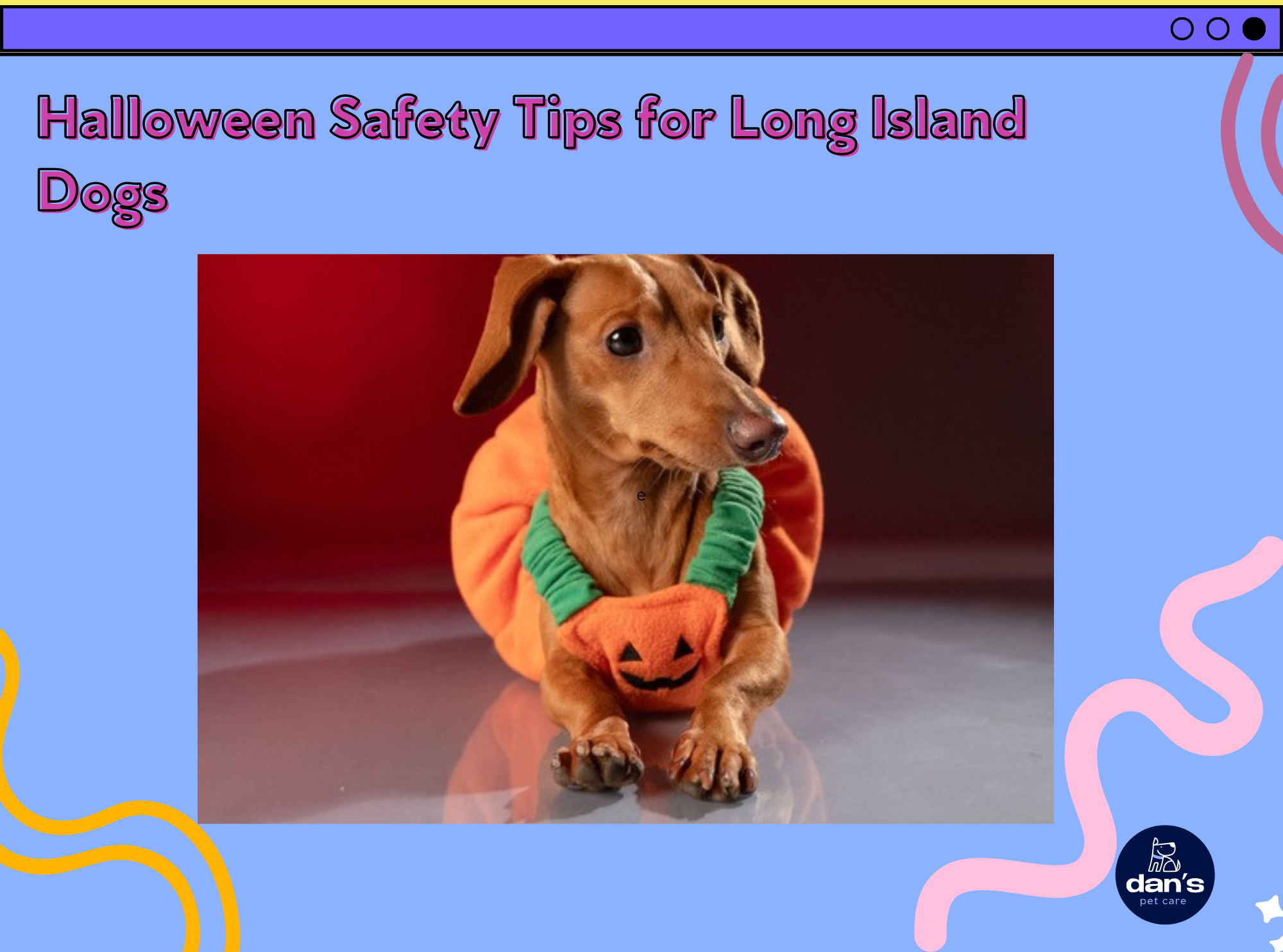
Dog costumes can be adorable, but not every dog enjoys wearing one, and that's fine. Watch your dog's body language when you put one on. Stiffness, freezing in place, or trying to back out of it are all signs they'd rather skip it.
If your dog does enjoy dressing up, stick to costumes without small attachable pieces, tight elastic, or anything covering their eyes or restricting normal movement. A costume shouldn't change how your dog walks, breathes, or sees.
Decorations That Look Like Toys
Fake cobwebs, small plastic skeletons, candle-lit pumpkins, and dangling string lights are everywhere in October, and a lot of it looks fair game to a curious dog. Fake spider webbing in particular can be a tangling and swallowing hazard.
Walk your own yard and entryway the way your dog would see it. Anything low, dangly, or chewable is worth moving up or out of reach for the month.
Halloween Walks on Long Island Streets
If your dog's regular walk falls during trick-or-treat hours, consider shifting it earlier in the evening or waiting until things quiet down. Streets that are normally calm can turn into a parade of costumed kids, strollers, and other dogs, which is a lot of stimulation packed into one walk.
Reflective gear matters more than usual on Halloween night, for you and your dog. Between costumes, low light, and distracted drivers watching for kids instead of pets, extra visibility is a small step that makes a real difference.
Signs Your Dog Is Overwhelmed
Panting when it isn't hot, pacing, refusing treats they'd normally take, or trying to hide are all signs a dog has had enough. It doesn't always look like obvious fear. Sometimes it just looks like a dog who suddenly won't settle.
If you notice these signs, the best thing you can do is give your dog an easy out, a quiet room, a crate with the door open, anywhere away from the front door and the noise.
A Quiet Room Can Be the Best Halloween Gift
Not every dog needs to be part of the festivities, and plenty of dogs are happier opting out entirely. Setting up a comfortable space away from the action, with a chew toy, some background noise, and the door closed, can turn a stressful night into a non-event for your dog.
For Long Island dog owners in neighborhoods with heavy trick-or-treat traffic, this alone prevents most Halloween-night problems before they start.
Quick Halloween Safety Checklist for Long Island Dog Owners
Keep candy bowls out of reach, not just out of sight
Double-check labels for xylitol in sugar-free treats
Pick up dropped wrappers and sticks right away
Block the front entryway with a gate or keep your dog leashed near the door
Confirm your dog's collar fits and microchip info is current
Skip the costume if your dog seems stressed by it
Move fake cobwebs and small decorations out of reach
Shift walk timing earlier or later to avoid the busiest trick-or-treat hours
Set up a quiet, closed-door space your dog can retreat to
Planning Ahead If You Won't Be Home
If Halloween night means you're out late, at a party, or working a shift that runs past trick-or-treat hours, your dog still has to get through all of it alone unless you plan for it. A dog left home alone during peak doorbell traffic can end up far more stressed than one with a person there to run interference.
This is worth thinking about a few days ahead, not at 5 p.m. on the 31st. A familiar person checking in or staying with your dog during the chaos makes a real difference in how the night actually goes for them.
How Dan's Pet Care Can Help
If you know Halloween night is going to be a lot for your dog, or you simply won't be home to manage the doorbell and the candy bowl at the same time, our pet sitting services can cover the gap. A familiar sitter in the house keeps your dog calmer, keeps the front door under control, and means you're not rushing home between trick-or-treaters to check on them.
Regular dog walking services also help in the days around Halloween, especially if you'd rather shift your dog's walk earlier in the evening to avoid the busiest hours on your block. Our team knows the neighborhoods and the timing that works, so your dog still gets a full, calm walk without wading into the middle of trick-or-treat traffic.
Final Thoughts
Halloween doesn't have to be a stressful night for your dog. Most of the risk comes down to a handful of predictable things, candy left within reach, an open front door, and hours of doorbell noise, and all of them are easy to plan around once you know what to watch for.
A little preparation now means you can enjoy handing out candy without one eye on the dog the entire night. If you'd like help keeping your dog calm, safe, and looked after this Halloween, Contact Dan's Pet Care today.