When we picture walking a dog, we usually think about movement: stretching their legs, burning energy, getting a little fresh air. But to a dog, a walk is about far more than steps. It is also about sniffing.
If you have ever watched your dog freeze at the same mailbox, patch of grass, or crack in the sidewalk for what feels like forever, you may have wondered what could possibly be so fascinating. To your dog, the answer is simple: everything.
Sniffing is one of the most important parts of any walk. It gives your dog information, mental stimulation, confidence, and genuine stress relief. A walk without sniffing still delivers physical exercise, but it skips one of the richest ways dogs experience the world around them.
For Long Island pet parents, this matters more than you might think. Our dogs live in busy neighborhoods full of people, other pets, wildlife, delivery trucks, landscapers, and ever-changing seasonal scents. A sniff walk gives your dog a natural, healthy way to process all of it.
Why Sniffing Matters So Much to Dogs
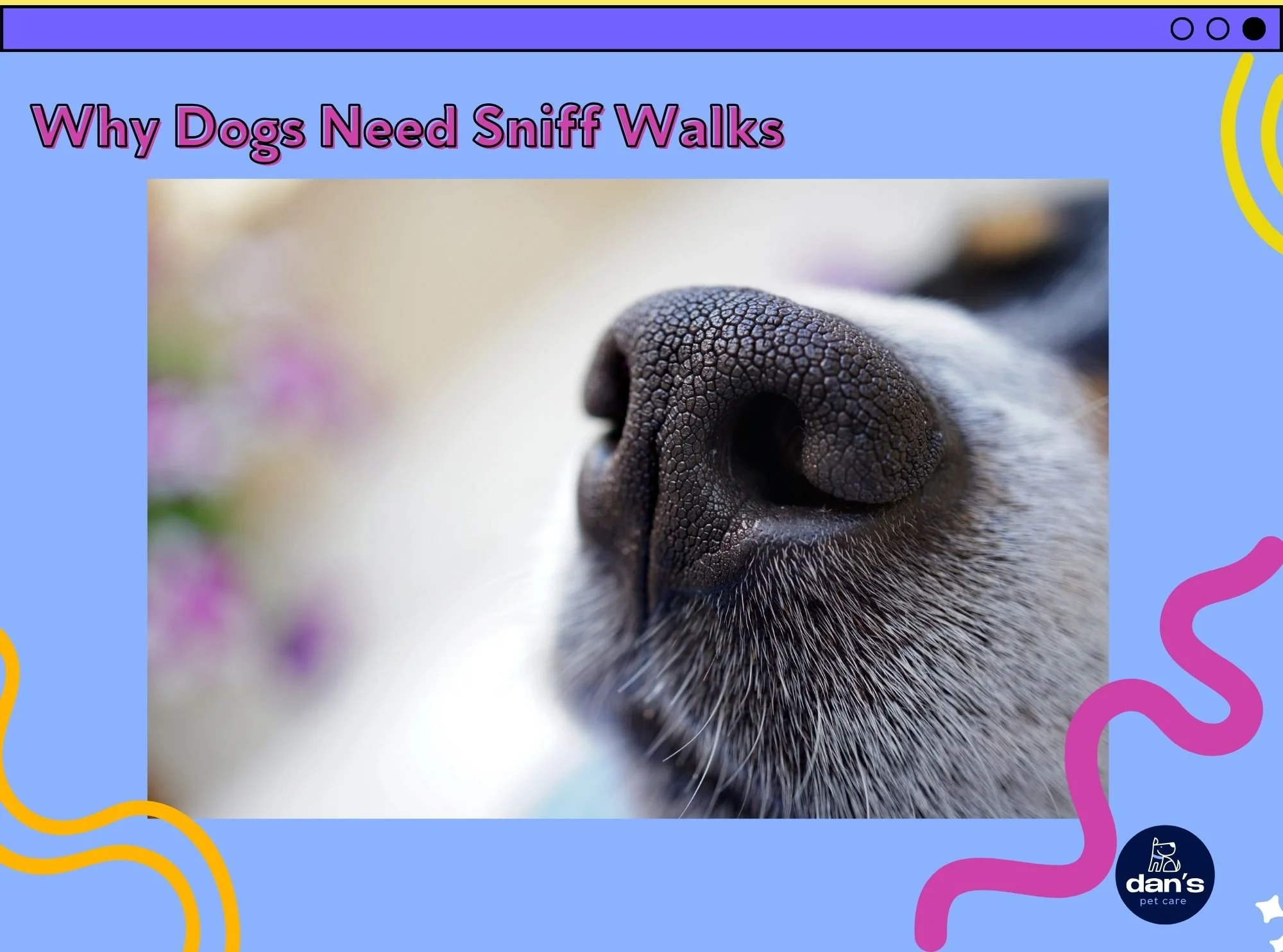
Dogs understand the world through their noses. Where humans reach for sight first, dogs lead with scent. A single loop around the block can tell your dog who walked by, which animals passed through, whether another dog was excited or anxious, and exactly what has changed since yesterday.
To us, a tree is just a tree. To your dog, that same tree is a neighborhood bulletin board.
A good sniffing session helps your dog:
• Gather information about their surroundings
• Explore their environment at their own pace
• Feel more in control and secure
• Burn mental energy, not just physical energy
• Beat boredom and build confidence
• Calm an overstimulated nervous system
This is why a slow, sniff-rich stroll can tire a dog out more thoroughly than a brisk march with no stops. Their brain is hard at work the entire time.
Sniffing Is Mental Enrichment
Many pet parents focus on physical exercise, but mental enrichment is every bit as important. Dogs need real opportunities to think, investigate, and problem-solve.
A sniff walk delivers that enrichment naturally, with no special toys or elaborate setup required. Every new scent is a small puzzle waiting to be solved. That makes it especially valuable for:
• High-energy dogs who never seem to wind down
• Anxious dogs who need a calming outlet
• Senior dogs who benefit from low-impact stimulation
• Puppies discovering the world for the first time
• Dogs who spend long hours indoors
• Dogs who become restless or wired at night
If your dog comes home from a walk and still seems keyed up, the answer usually is not a faster walk. It is a more mentally satisfying one.
How Sniff Walks Reduce Stress
Dogs can become stressed by changes in routine, loud noises, busy streets, or simply too much excitement. Sniffing gives them a way to slow down and settle.
When a dog is allowed to sniff calmly, they are doing something natural and entirely self-directed. That sense of choice is deeply reassuring, particularly for dogs who are nervous or easily overwhelmed.
On Long Island, a single walk might include school buses, bicycles, other dogs, construction noise, squirrels, and crowds. Giving your dog time to sniff lets them decompress instead of staying locked in a constant state of alert.
Sniffing Can Improve Walking Manners
It may sound backwards, but allowing more sniffing often improves your dog’s leash behavior. When dogs are never permitted to stop and explore, they tend to pull harder, lunge toward interesting smells, and grow frustrated.
A dog who trusts that sniff breaks are coming is far more willing to walk politely in between them. You can build a simple, predictable rhythm:
• Walk calmly for a short stretch
• Ask for a quick check-in
• Give permission to sniff
• Continue walking
• Repeat throughout the outing
This teaches your dog that polite walking unlocks the things they love. Instead of fighting the sniffing, you put it to work as a reward.
Why Puppies Especially Need to Sniff
Puppies are learning about their world every single day. New smells, sounds, textures, and environments all help shape their confidence.
A puppy walk should never be only about covering distance. In fact, most puppies gain far more from short, positive, sniff-filled outings than from long walks that leave them overwhelmed. Letting your puppy sniff helps them:
• Explore safely and at their own pace
• Build lasting confidence
• Learn the layout of their neighborhood
• Practice calm observation
• Develop healthy curiosity
• Adjust comfortably to new environments
For puppies on Long Island, even a short walk close to home offers plenty to learn. A few minutes spent sniffing grass, hearing traffic, and meeting neighbors calmly can be a meaningful part of early development.
Senior Dogs Benefit From Sniff Walks Too
Older dogs may not cover the same distance they once did, but they still need enrichment. Sniff walks are ideal for seniors because they flex easily to each dog’s comfort level.
A senior dog often thrives on a shorter route with extra time to sniff, pause, and move at their own pace. It keeps their mind engaged without straining their body. For older dogs, the goal is never distance. It is comfort, stimulation, and quality of life.
How to Add More Sniffing to Your Dog’s Walk
You do not need to turn every walk into a grand expedition. Small adjustments make a real difference.
Let Your Dog Lead Sometimes
Choose a safe area and let your dog decide where to sniff. You stay in charge of safety while your dog enjoys a little more freedom of choice.
Use a Cue
Teach a phrase like “go sniff” so your dog knows exactly when it is okay to explore. A clear cue creates helpful structure.
Slow Down
A slower walk is not a failed walk. For many dogs, it is a better one.
Visit New Spots
A different street, park path, or quiet corner of the neighborhood offers fresh scents and brand-new enrichment.
Balance Movement and Sniffing
Some dogs need both exercise and exploration. Blend brisk walking with sniff breaks for a well-rounded outing.
When Sniffing Needs Boundaries
Sniffing is healthy, but your dog still needs guidance, because not every scent is a safe one. Dogs should never be allowed to sniff or eat garbage, unknown food, chemicals, animal waste, or anything potentially dangerous.
Use gentle redirection when needed, and keep treats on hand to reward your dog for moving away from unsafe items. A great walk balances freedom with safety.
How Dan’s Pet Care Supports Better Walks
At Dan’s Pet Care, we know a great walk is about far more than getting from one place to another. It is about giving each dog the right blend of exercise, enrichment, structure, and care.
Our dog walking services on Long Island are built around each dog’s individual needs. Some dogs want a brisk walk. Some need a relaxed relief visit. Others crave extra sniffing time to feel truly fulfilled, or a dependable routine while their family is at work or away.
Beyond walks, we offer pet sitting, puppy support, dog training, and enrichment-based care. Our Pet Care Specialists understand that every dog is different, which is exactly why thoughtful, individualized walks matter so much.
A Better Walk Starts With Your Dog’s Nose
The next time your dog stops to sniff, try not to see it as wasted time. Your dog is reading the world, exercising their mind, and enjoying one of the most natural activities available to them.
A sniff walk can leave your dog calmer, happier, and more satisfied. It supports better behavior, eases boredom, and makes everyday walks far more meaningful.
For professional dog walking on Long Island, contact Dan’s Pet Care today. We would love to help your dog enjoy walks that are safe, enriching, and full of the scents that make life exciting.