
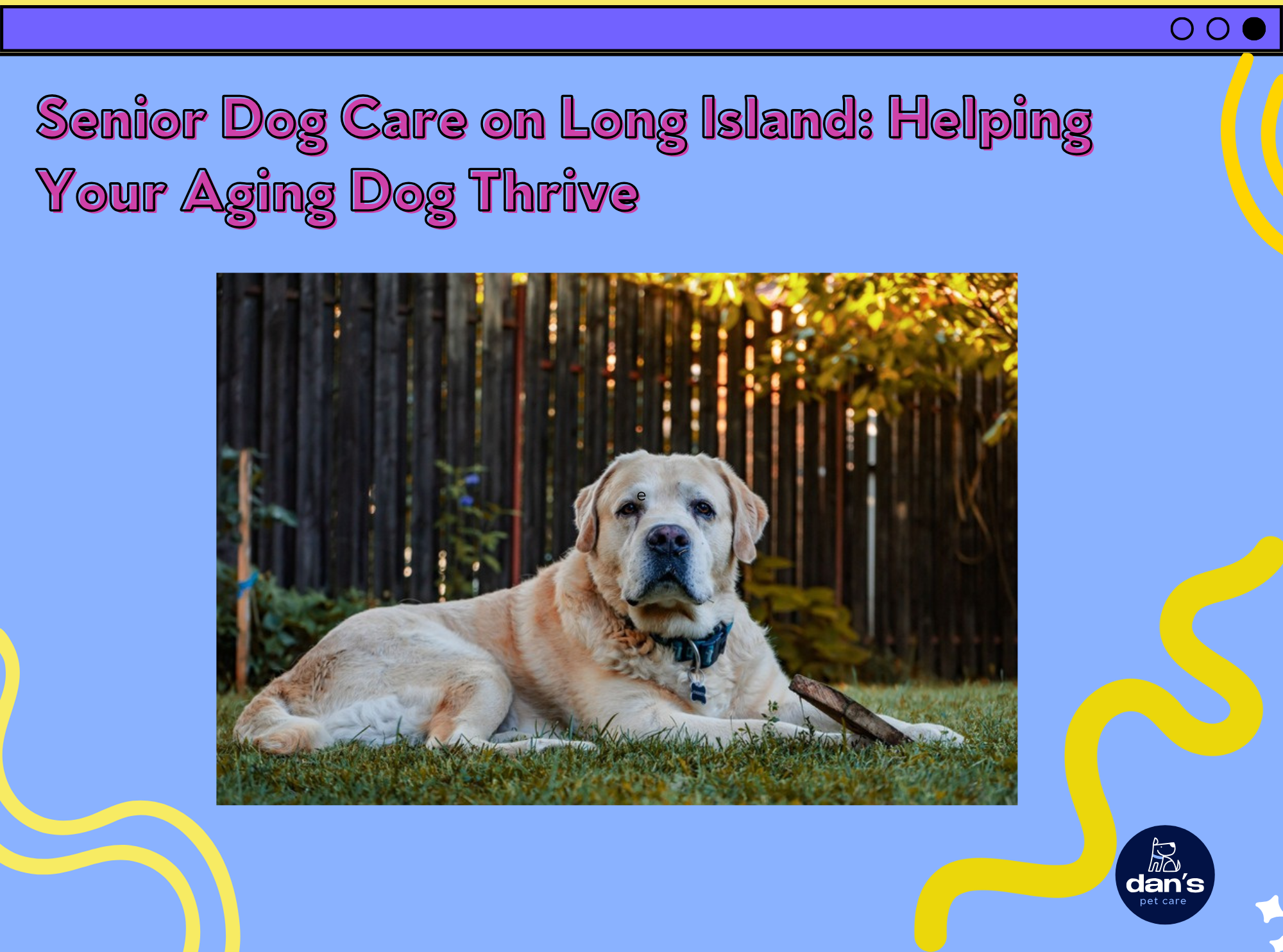
If your dog has started sleeping a little later, moving a little slower, or needing an extra second to get up from the couch, you're not imagining it. Dogs age quietly, a little at a time, and most owners don't notice until the signs are already there. With November marking Senior Pet Month, it's a good moment for Long Island dog owners to take stock of how their dog is really doing these days.
The good news is that senior dogs can live full, happy lives with a few adjustments. None of this requires an overhaul of how you care for your dog. It just means paying closer attention and making small changes as your dog's needs shift.
Recognizing the Signs of Aging
Aging shows up differently in every dog, but there are common patterns. A once-eager jumper may start hesitating at the stairs. A dog who used to bound to the door at the sound of a leash may now get up more slowly. Gray hair around the muzzle, a bit more sleeping, and a shorter fuse for rowdy play are all normal parts of getting older.
None of these changes happen overnight. They creep in, which is exactly why it helps to check in on your dog's habits every so often instead of assuming nothing has changed. For Long Island dog owners juggling busy schedules, it's easy to miss the slow stuff.
When Does a Dog Become a "Senior"?
There's no single age that applies to every dog. Smaller breeds often aren't considered seniors until 10 or 11, while larger breeds, who tend to have shorter lifespans overall, can start showing senior signs as early as 6 or 7. Genetics, past injuries, and overall health all play a role too.
Rather than fixating on a birthday, pay attention to behavior. A 7-year-old Great Dane and a 7-year-old Chihuahua are often in very different stages of life. Your vet is the best resource for figuring out where your individual dog stands.
Mobility Changes and Joint Support
Stiffness after naps, slower stair climbing, and reluctance to jump into the car are some of the earliest signs of joint trouble. Arthritis is extremely common in older dogs, and it's often more manageable than owners expect once it's identified.
Simple changes help a lot: a ramp instead of stairs, a supportive orthopedic bed, and keeping your dog at a healthy weight to reduce strain on their joints. Talk to your vet about whether supplements or medication make sense for your dog. For Long Island dog owners, even small modifications at home can make a big difference in how comfortable an aging dog feels day to day.
Vision and Hearing Loss
Many senior dogs develop some degree of vision or hearing loss, and it often happens so gradually that the dog adapts before the owner even notices. You might see your dog startle more easily when approached from behind, or bump into furniture that's been moved.
Keeping your furniture layout consistent and using verbal cues alongside hand signals can help a dog with declining senses feel more secure. If you notice cloudy eyes, sudden clumsiness, or your dog seems to be ignoring you more than usual, it's worth a vet visit to rule out anything treatable.
Cognitive Changes: Canine Dementia Signs
Just like people, dogs can experience cognitive decline as they age. This might look like your dog seeming confused in familiar spaces, staring at walls, pacing at night, or having more accidents in the house despite being fully house trained for years.
These signs are worth bringing up with your vet rather than writing off as "just old age." There are strategies, and sometimes medications, that can slow the progression and keep your dog more comfortable and oriented. For Long Island dog owners, catching these changes early tends to make management a lot easier.
Diet and Weight Management for Senior Dogs
Older dogs typically need fewer calories since their activity level naturally drops, but they still need high-quality protein to maintain muscle mass. Carrying extra weight is especially hard on aging joints, so keeping your dog lean matters more than ever in their senior years.
Some senior dogs also benefit from diets formulated for joint support or sensitive digestion. Your vet can help you figure out whether a diet change makes sense based on your dog's specific health picture, rather than guessing based on a bag label at the pet store.
Adjusting Exercise and Walk Routines
Senior dogs still need exercise, just in a different shape than when they were younger. Shorter, more frequent walks are often easier on aging joints than one long walk, and they still provide the mental stimulation dogs need.
Watch for signs that your dog is overdoing it, like heavy panting that doesn't settle down or stiffness the next day. On the flip side, don't assume your dog wants to stop moving altogether. Gentle, regular movement actually helps keep joints from stiffening further. For Long Island dog owners with busy days, breaking walks into two or three shorter outings can work better than squeezing in one big one.
Grooming Needs for Older Dogs
Senior dogs often need a bit more grooming attention, not less. Nails that aren't worn down naturally from as much activity can grow too long and affect how a dog stands and walks. Skin can get drier, and coats may need gentler products.
Brushing regularly also gives you a chance to check for new lumps, bumps, or sore spots that are worth mentioning to your vet. A gentle grooming routine is a simple way to stay on top of your dog's changing body.
Veterinary Care: More Frequent Checkups
Many vets recommend moving from annual to twice-yearly checkups once a dog reaches their senior years. Conditions like kidney disease, thyroid issues, and dental disease are often easier to manage when they're caught early, before symptoms become obvious at home.
Bloodwork done during these visits can flag issues long before your dog shows outward signs. It might feel like an extra expense, but catching something early is almost always easier, and kinder to your dog, than dealing with it once it's advanced.
Creating a Comfortable Home Environment
Small adjustments around the house can make a real difference for an aging dog. A few things worth considering:
Add rugs or runners over slippery floors to help with traction
Provide a supportive, well-cushioned bed away from drafts
Use a ramp or steps for the couch, bed, or car
Keep food and water bowls easily accessible, raised slightly if your dog has neck or joint discomfort
Keep a consistent routine, since predictability is comforting for an aging dog
Make sure your dog has a quiet space to retreat to, away from household noise and chaos
None of these changes need to happen all at once. Start with whatever would help your dog most right now, and add more as needed.
Senior Dogs and Daycare or Boarding: What Changes
A senior dog's needs during daycare, boarding, or time away from home often look different than they did at two years old. A rowdy daycare playroom that was once exciting might now be overwhelming or physically tiring for an older dog who tires more easily or has joint pain.
This doesn't mean a senior dog needs to be left out of care options, it just means the setup matters more. Quieter environments, more rest breaks, and caregivers who understand an older dog's pace tend to work much better than a one-size-fits-all approach. For Long Island dog owners, it's worth having an honest conversation with whoever cares for your dog about what your senior pup actually needs these days.
The Emotional Side: Patience and Bonding with an Aging Dog
Caring for a senior dog asks for a little more patience, and it often deepens the bond you've already built. A slower walk means more time to notice your dog sniffing happily at something interesting. A dog who naps more also tends to want more quiet time curled up next to you.
It's normal to feel a mix of emotions watching your dog age. Focusing on their comfort and happiness in the present, rather than mourning the energetic younger dog they used to be, tends to make this stage easier for both of you.
How Dan's Pet Care Can Help
Senior dogs often do better with gentle, predictable routines rather than long or high-energy outings, and that's exactly what our dog walking services are built to provide. Our Pet Care Specialists can tailor visit length and pace to match your dog's mobility and energy level, whether that means a shorter stroll around the block or extra time for sniffing at their own speed.
For senior dogs who do better staying in their own familiar space rather than going to daycare or boarding, our pet sitting services bring care to your dog at home. This keeps their routine, their bed, and their comfort zone intact, which matters even more for an aging dog who thrives on consistency.
Final Thoughts
Getting older doesn't mean your dog's best days are behind them. With a few thoughtful adjustments, senior dogs can stay comfortable, engaged, and close to their people for years. Paying attention now, rather than waiting for a bigger problem to show up, is the simplest way to give your dog a great senior chapter.
If you're noticing your dog slowing down and want support adjusting their care routine, Contact Dan's Pet Care today to talk about walking or pet sitting options built around your senior dog's needs.