
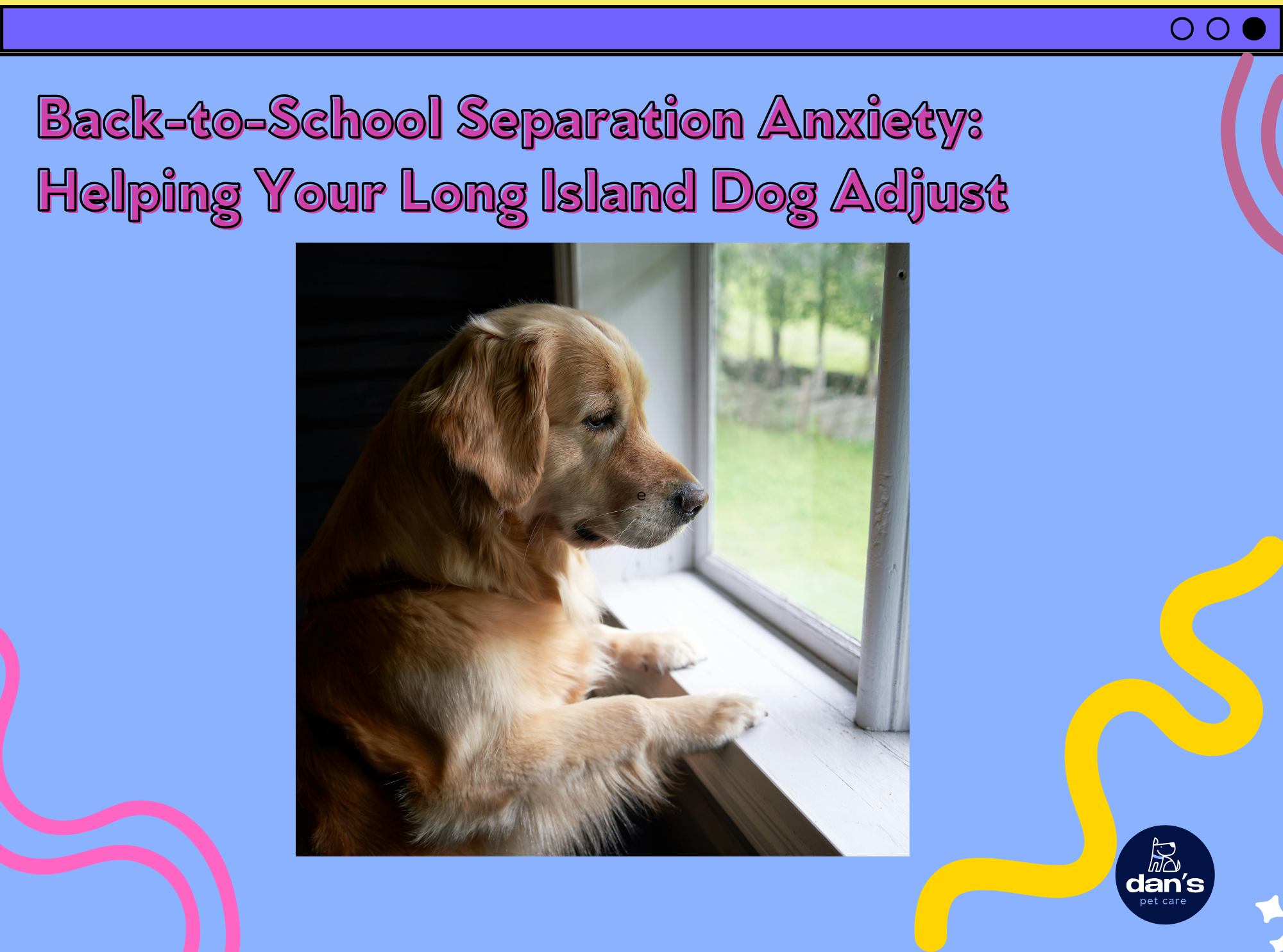
September changes the rhythm of a house fast. One week the kids are home, the door is always opening and closing, and your dog has company from breakfast to bedtime. The next week, everyone is gone by 8 a.m. and the house stays quiet until 3 or later. Dogs notice that shift immediately, and plenty of Long Island dogs spend the first few weeks of school looking a little lost.
If your dog has been pacing by the door, barking more than usual, or getting into things they normally leave alone, you're not imagining it. Back-to-school season is one of the most common triggers for separation anxiety in dogs, and understanding what's happening (and what actually helps) makes the transition a lot smoother for everyone in the house.
Why September Feels Different for Long Island Dogs
Summer on Long Island tends to be loud and social for dogs. Kids are in and out of the yard, there are barbecues and pool days, and someone is usually around to toss a ball or sneak a snack. Dogs get used to that level of attention without even trying.
When school starts, that all disappears at once. It's not a gradual change, it's a sudden one, and dogs don't have a calendar to explain why the house emptied out. For Long Island dog owners, the adjustment period after Labor Day is worth planning for instead of just hoping your dog figures it out on their own.
What Separation Anxiety Really Looks Like
Separation anxiety isn't just a dog who's a little bored. It's a genuine stress response tied to being left alone, and it can show up in ways that look a lot like misbehavior if you don't know what you're looking at.
Some dogs get destructive. Others bark or howl for long stretches. Some dogs won't touch food while you're gone, even a favorite treat, because they're too anxious to eat. The common thread is that it only happens around departures and absences, not randomly throughout the day.
Signs Your Dog May Be Struggling
A few dogs show textbook symptoms, but most show a mix of smaller signs that are easy to miss at first. Watch for:
Pacing, whining, or barking that starts right as you're getting ready to leave
Chewing, scratching at doors, or other destruction that's new or worse than before
Accidents in the house from a dog who is otherwise fully house-trained
Drooling, panting, or shaking that doesn't match the temperature or activity level
Following you from room to room more closely than usual, even before you've left
Not eating meals or treats until you get home
One or two of these once in a while is normal. A pattern that shows up every time you leave is the thing worth addressing.
It's Not "Bad Behavior," It's Stress
The hardest part for a lot of owners is that separation anxiety looks like defiance. A chewed-up doormat or a puddle by the front door can feel personal, especially if your dog was doing fine all summer. It helps to remember that a genuinely anxious dog isn't choosing to act out. They're stuck in a stress response they don't know how to turn off.
Punishing a dog after the fact doesn't fix separation anxiety, because the dog isn't connecting the correction to the behavior, they're just getting more anxious about your return. For Long Island dog owners dealing with this for the first time, shifting the mindset from "misbehaving" to "struggling" changes how you approach a solution.
Build a Predictable Morning Routine
Dogs settle faster when mornings feel the same every day. A consistent order of events, wake up, bathroom break, breakfast, a short walk, then departure, gives your dog a pattern to anticipate instead of a scramble that ends with the door closing.
Rushed, chaotic mornings tend to wind a dog up right before you leave, which makes the alone time that follows feel worse. Even ten extra minutes of calm structure before you head out the door can take the edge off for a sensitive dog.
Practice Short Goodbyes Before the Long Ones
If your dog hasn't been properly alone for a while, jumping straight into a full school-and-work day away is a big ask. Practicing shorter absences first, ten minutes, then thirty, then a couple of hours, over a weekend or two before the new routine fully kicks in gives your dog a chance to relearn that being alone is temporary and safe.
Keep departures and arrivals low-key during this practice. No big send-off, no big reunion, just a normal in-and-out. Dogs pick up on our energy, and a calm goodbye is a lot easier to recover from than a dramatic one.
Tire Your Dog Out Before the House Empties
A dog who's had real exercise before you leave is a dog who's more likely to settle in and nap instead of pacing the house all day. A brisk walk, a game of fetch in the yard, or a longer outing before the morning rush starts burns off the energy that would otherwise turn into anxious behavior.
This matters even more for young, high-energy dogs who spent the summer with nonstop company. Mental tiring counts too. A sniffy walk around the neighborhood, working the nose instead of just the legs, can be just as effective as a hard run.
Give Your Dog Something to Do
An empty house with nothing to occupy your dog's attention leaves a lot of room for anxious thoughts to take over. A frozen food-stuffed toy, a slow feeder, or a rotating set of chew toys saved just for alone time gives your dog something to focus on besides the sound of the front door.
The goal isn't to distract a severely anxious dog out of a full-blown panic response, that needs a different approach, but for mild to moderate adjustment stress, a good chew or puzzle toy genuinely helps fill the first stretch of alone time when dogs tend to be most unsettled.
Keep Goodbyes and Hellos Low-Key
It's tempting to make a big deal out of leaving and coming home, especially if you feel guilty about being gone more. But an emotional goodbye or an over-the-top greeting actually teaches your dog that departures and arrivals are significant events worth getting worked up about.
A calm "be back soon" on the way out and a relaxed hello once you're home, waiting until your dog settles a bit before giving big affection, sends the message that comings and goings are just a normal part of the day. For Long Island dog owners, this small habit shift is one of the easiest changes to make and one of the most effective.
Consider a Midday Visit or Walk
For a dog who's used to company all day, going from constant attention to a full eight-hour stretch alone is a lot to ask right out of the gate. Breaking up that stretch with a midday walk or visit gives your dog a reset in the middle of the day, a bathroom break, some exercise, and a little bit of company before the second half of the day alone.
This is especially useful during the first few weeks of the new school year, when dogs are still adjusting to the routine. Even one visit a day can take a long, anxious stretch and turn it into two more manageable ones.
When to Loop In Your Vet or a Trainer
Most dogs adjust within a few weeks with consistency and a little extra support. But if your dog's symptoms are severe, self-injury, panic-level destruction, or nonstop vocalizing, or if things aren't improving after a few weeks of a solid routine, it's worth talking to your veterinarian.
Your vet can rule out anything medical that might be contributing and can refer you to a certified trainer or veterinary behaviorist if needed. There's no shame in getting extra help. Some dogs need more structured behavior work than a routine change alone can provide, and catching it early makes treatment easier.
How Dan's Pet Care Can Help
A predictable daily routine is one of the best tools for easing a dog through the back-to-school adjustment, and that's exactly what our dog walking services are built for. A midday visit breaks up a long day alone, gives your dog a bathroom break and some exercise, and adds a familiar face to the middle of an otherwise quiet house.
For dogs who need more social time to feel settled, our doggy daycare and boarding options give them company, play, and supervision on the days a quiet house just isn't the right fit. Our Pet Care Specialists get to know your dog's personality and needs, so the plan we build fits how your dog is actually adjusting, not a one-size-fits-all schedule.
Final Thoughts
The first few weeks after Labor Day are an adjustment for the whole family, dogs included. A little patience, a predictable routine, and some extra support during the transition go a long way toward helping your dog feel settled again. Most dogs find their new normal within a few weeks, especially with consistency at home.
If your dog is struggling to adjust to the quieter house this fall, we'd love to help build a routine that works for both of you. Contact Dan's Pet Care today to set up a midday walk, daycare, or a care plan built around your dog's needs.