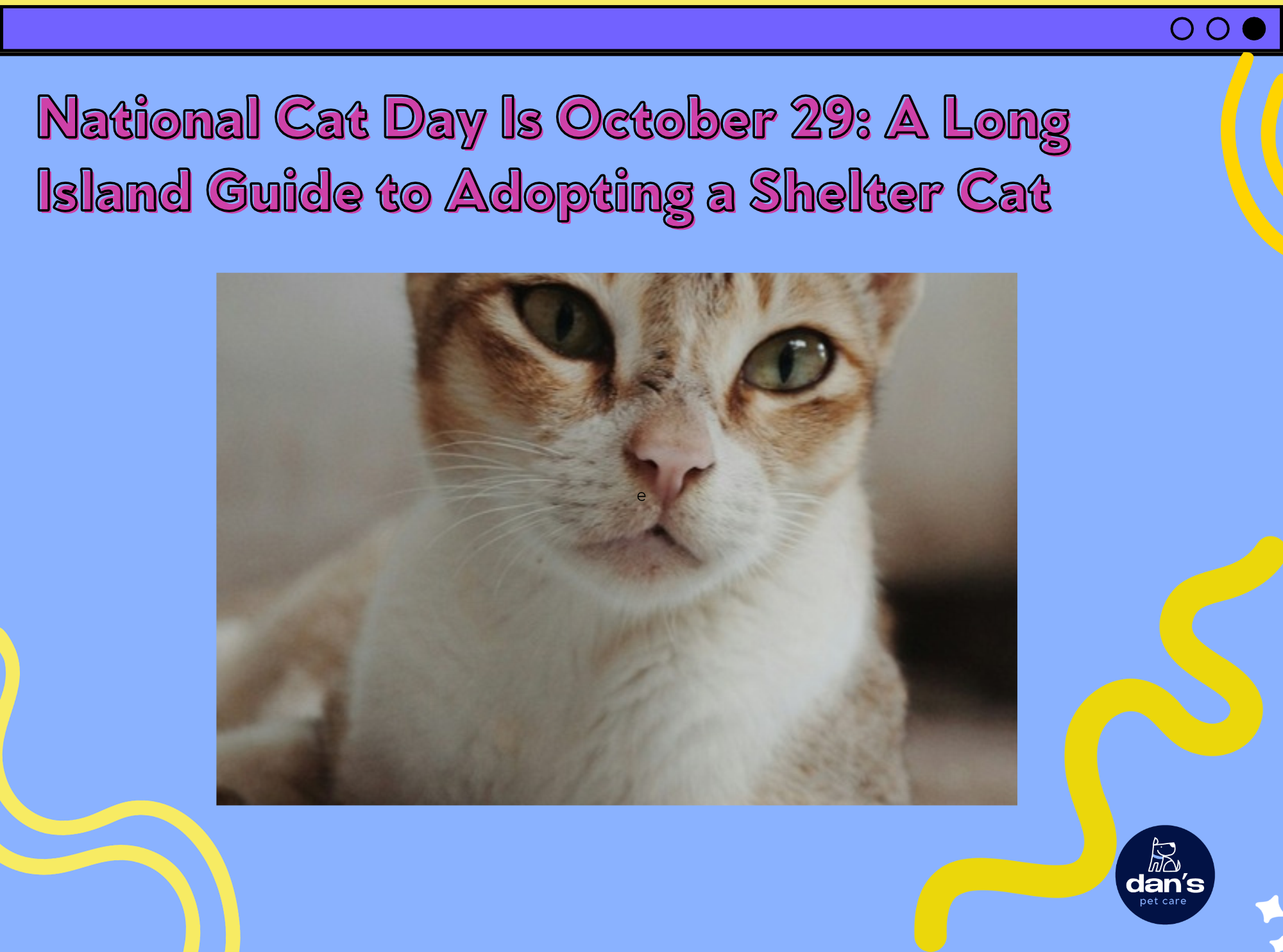
Every October 29, National Cat Day comes around as a good reminder that shelters across Nassau and Suffolk County are full of cats who would love nothing more than a quiet couch, a sunny windowsill, and a person to call their own. You don't need the holiday as an excuse, but it's as good a nudge as any if adding a cat to your Long Island household has been on your mind.
Adopting a cat is simpler than adopting a dog in some ways and trickier in others. Cats settle in on their own schedule, and knowing what to expect before you bring one home makes the whole process smoother for both of you. Here's what Long Island cat owners should know before, during, and after adoption day.
What National Cat Day Is Actually About
National Cat Day was started in 2005 by pet lifestyle expert Colleen Paige to celebrate cats and bring attention to the number of cats still waiting in shelters. It is not just a feel-good hashtag. The day is specifically meant to push people toward adoption instead of buying from breeders or pet stores, and to remind owners about the importance of spaying and neutering.
For Long Island cat owners, the day is a good yearly checkpoint. Even if you already have a cat, it is worth sharing a shelter's adoptable list with a friend or family member who has been talking about getting one.
Why Shelter Cats Make Great Companions
A lot of people assume shelter cats come with "baggage." In reality, most cats end up in shelters because of a change in their owner's circumstances, not because of anything the cat did. Moves, allergies, and financial hardship are far more common reasons than behavior problems.
Adult cats in particular are often overlooked in favor of kittens, but they come with a real advantage: what you see is what you get. Their personality, size, and energy level are already set, which makes it easier to find a good match for your home.
Long Island Shelters and Rescues Worth Knowing
Long Island has several well-established shelters and rescues worth checking when you start your search:
North Shore Animal League America (Port Washington) – one of the largest no-kill shelters in the country, with cats and kittens of every age typically available.
Bideawee (Wantagh) – a long-running Long Island shelter offering adoption, and post-adoption behavioral support.
Last Hope Inc. (Wantagh) – an all-volunteer rescue that fosters cats in local homes before adoption.
Save-A-Pet Animal Rescue (Port Jefferson Station) – a no-kill shelter with an active cat and kitten adoption program.
Each organization has its own application process and adoption fee, so it is worth checking their websites directly before visiting. For Long Island cat owners who are not sure where to start, calling ahead and asking what cats are currently available saves a wasted trip.
Kitten or Adult Cat: What Fits Your Home
Kittens are a lot of fun, but they are also a lot of work. They need more supervision, more playtime, and patience while they learn the rules of your house. If you work long hours or travel often, an adult cat who is already calm and independent might be the better fit.
Adult cats also adjust to a new home faster in some ways, since their personality is already formed. You know going in whether you are getting a lap cat or a cat who prefers to observe from a distance. Neither is better, but one is probably a better match for your lifestyle than the other.
Questions to Ask Before You Adopt
Before you commit to a specific cat, it helps to ask the shelter a few direct questions. Has the cat lived with other cats or dogs before? Is the cat litter trained? Does the cat have any known health issues or sensitivities? Why was the cat surrendered, if that information is available?
None of these questions are meant to scare you off. They simply help you walk in prepared instead of guessing. A good shelter will be upfront about a cat's quirks rather than glossing over them to speed up the adoption.
The Meet-and-Greet Matters
Most shelters will let you spend time with a cat before finalizing an adoption, and it is worth taking that seriously. A cat who hides in the corner of a loud shelter room is not necessarily shy at home, but it still helps to see how the cat reacts to being approached, picked up, or handled gently.
If you already have pets at home, ask whether a trial period or home visit is possible. Some rescues, including several of the ones listed above, offer short foster-to-adopt windows specifically so families can confirm the match works before it becomes permanent.
Preparing Your Home Before Adoption Day
Cats are creatures of habit, so setting up their space before they arrive makes the transition easier. A litter box, food and water bowls, a scratching post, and a few hiding spots should be ready to go before the carrier door opens.
It also helps to walk through your home the way a curious cat would. Tuck away dangling cords, secure any toxic houseplants, and make sure small or breakable items are out of reach of a cat who likes to jump on counters. For Long Island cat owners in older homes, check for gaps around radiators, vents, or loose window screens a cat could squeeze into.
The First 72 Hours: Let Them Decompress
New cats almost always hide for the first day or two, and that is completely normal. Set your new cat up in one quiet room with their litter box, food, water, and a cozy hiding spot, and let them come out on their own terms rather than chasing them around the house to say hello.
Resist the urge to introduce your cat to every family member and visitor right away. A slow, boring first few days is actually a good sign. It gives the cat time to learn that your home is safe before they are expected to explore the rest of it.
Introducing a New Cat to Resident Pets
If you already have a cat or dog at home, introductions should happen gradually over a week or two, not all at once. Swapping blankets between the animals so they get used to each other's scent is a simple first step before any face-to-face meeting happens.
Keep early interactions short and supervised, and always give the new cat an escape route. A rushed introduction is one of the most common reasons a newly adopted cat ends up stressed or hiding for weeks longer than necessary. For Long Island cat owners blending households, patience in these first few weeks pays off later.
Setting Up a Routine
Cats thrive on predictability. Feeding at consistent times, keeping the litter box in the same spot, and setting aside a bit of daily play time helps a new cat settle in faster than you might expect. Interactive toys like wand toys are a good way to burn off energy and build trust at the same time.
A consistent routine also makes it easier to notice if something is off later on, since you will quickly learn what normal looks like for your particular cat. Appetite changes, litter box habits, and energy level are all things that are easier to track once a routine is in place.
Budgeting for the First Year
Adoption fees at Long Island shelters and rescues vary, but they typically cover spaying or neutering, vaccinations, and sometimes microchipping, which saves money compared to handling those separately. Beyond the adoption fee, new owners should budget for a litter box setup, food, a carrier, and an initial vet visit.
Ongoing costs like food, litter, and routine vet care add up over the year, and prices vary depending on the cat's needs and the products you choose. If you are also planning to use a professional cat sitter for trips or long workdays, it is worth reaching out directly for a quote rather than guessing, since pricing depends on your cat's visit schedule and specific needs.
Spaying, Neutering, and Microchipping
Most shelter cats are already spayed or neutered before adoption, but it is worth confirming this directly rather than assuming. The same goes for microchipping, which is one of the simplest ways to get a cat back home if they slip out a door or window.
If you are adopting a kitten too young to be fixed yet, ask the shelter what their follow-up process looks like and make sure you get it scheduled. For Long Island cat owners, registering a microchip's contact information right away, and updating it if you move, is an easy step that is simple to forget.
How Dan's Pet Care Can Help
Bringing home a new cat is exciting, but it also means your routine has to flex around theirs, especially in those first few weeks of decompression. Dan's Pet Care's cat visit services are built around keeping a newly adopted cat's routine steady, with consistent feeding times, litter box checks, and quiet companionship while you are at work or away.
If you travel or have unpredictable hours, our pet sitting services give your new cat in-home care instead of an unfamiliar boarding environment, which matters most in those early settling-in months. Our Pet Care Specialists are trained to read a cat's comfort level and adjust their approach accordingly, so your new companion never feels rushed.
Final Thoughts
National Cat Day is really just a reminder of something Long Island shelters see every day: there are wonderful cats waiting for homes right now, and adopting one is one of the most rewarding things a pet lover can do. A little preparation and patience in those first few weeks sets the stage for years of companionship.
Thinking about adopting, or need help keeping your new cat's routine steady once they are home? Contact Dan's Pet Care today to talk through cat visits or sitting built around your new companion's needs.