
Long Island winters can be deceptively hard on cats, even the ones who never set a paw outside. Between freezing nights, road salt, dry heated air, and the string of holiday decorations still scattered around the house, January brings a different set of risks than the rest of the year. Most of them are easy to prevent once you know what to look for.
Whether your cat is strictly indoor, goes out occasionally, or is one of the community cats many Long Island neighborhoods look after, here's what to watch for this winter and how to keep your cat safe, warm, and healthy until spring.
Why Winter Is Riskier for Cats Than Most Owners Realize
Cats are small, and small bodies lose heat fast. A healthy adult cat can tolerate a quick trip outside in cold weather, but prolonged exposure, wet fur, or wind chill can drop a cat's body temperature dangerously low in a surprisingly short time. Kittens, senior cats, and cats with health conditions are even more vulnerable. On top of the cold itself, winter introduces hazards that simply aren't present the rest of the year, from antifreeze puddles in driveways to salt-covered sidewalks.
Know the Difference: Indoor Cats vs. Outdoor and Community Cats
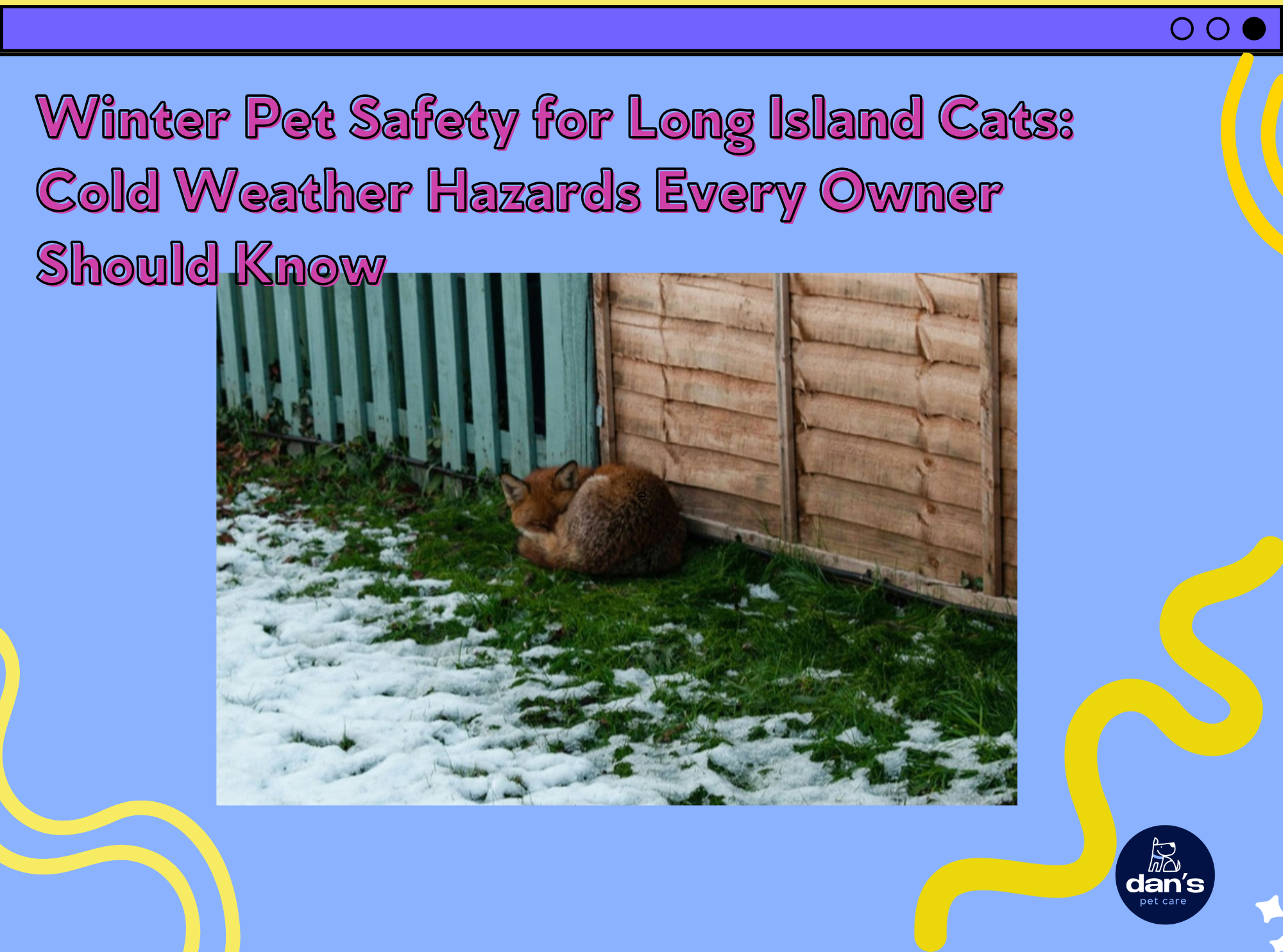
How much winter risk your cat faces depends a lot on their lifestyle. A fully indoor cat mostly needs protection from dry air, drafts, and holiday hazards still around the house. A cat who spends time outdoors needs active protection from cold exposure, road chemicals, and traffic, since cats often seek out warm, hidden spots that put them in danger. Long Island's community and barn cats need a different kind of help again, usually shelter and consistent food and water rather than anyone trying to bring them inside.
The Hidden Danger Under the Hood: Cats and Warm Car Engines
This is one of the most common cold-weather cat injuries, and most owners have never heard of it. Outdoor and community cats regularly climb up into the engine compartments of parked cars to escape the cold, since a recently driven engine stays warm for a while after it's shut off. The danger comes when the car starts again. Every winter, animal hospitals treat cats for serious injuries, and worse, caused by fan belts and moving engine parts.
Before starting your car on a cold morning, bang loudly on the hood or honk the horn once. It takes two seconds and gives any cat hiding inside a chance to run clear before the engine turns over.
Antifreeze: Small Amount, Big Danger
Antifreeze has a sweet taste that cats and dogs find appealing, which makes it one of the most dangerous substances in any garage or driveway during the winter months. Even a small amount is enough to cause kidney failure, and symptoms can take hours to appear, so a cat that seems fine right after exposure can still be in serious danger. If you suspect your cat has come into contact with antifreeze, don't wait for symptoms. Call your veterinarian or an emergency animal hospital right away. Wipe up any spills immediately and store containers somewhere cats can't reach.
Ice Melt and Rock Salt Can Burn and Poison Paws
Rock salt and chemical ice melt are everywhere on Long Island sidewalks, driveways, and parking lots once temperatures drop. These products can irritate and even chemically burn a cat's paw pads, and because cats groom themselves, licking salt or ice melt residue off their paws can lead to stomach upset or worse. If your cat spends any time outdoors, wipe their paws with a damp cloth as soon as they come back in, and look for pet-safe, chloride-free ice melt options if you're treating your own property.
Frostbite and Hypothermia: Signs Every Owner Should Know
Frostbite most often affects a cat's ears, tail, and paws, the extremities with the least protection from the cold. Hypothermia is a drop in core body temperature that can become life-threatening without treatment. Both are medical emergencies. Know the warning signs so you can act quickly:
Shivering, followed by unusual lethargy or weakness
Pale, gray, or bluish skin on the ears, nose, or paw pads
Cold-feeling ears or paws that seem stiff or unusually sensitive to the touch
Curling into an unusually tight ball or seeking out heat sources obsessively
Slow, shallow breathing or a weak pulse in severe cases
If you notice any of these signs, warm your cat gradually with blankets, avoid direct high heat like hair dryers, and get them to a veterinarian as soon as possible.
Dry Winter Air and Dehydration
Indoor heating systems pull a lot of moisture out of the air, and cats don't always compensate by drinking more water on their own. Dry air can lead to flaky skin, a dull coat, and static that cats find genuinely unpleasant. A cool-mist humidifier in the rooms your cat spends the most time in can help, and so can a cat water fountain, which many cats find more appealing than a still bowl, especially in winter when they're naturally drinking less overall.
Space Heaters, Fireplaces, and Other Indoor Hazards
As temperatures drop, space heaters and fireplaces come out of storage, and both come with real risk for a curious cat. Space heaters can tip over, overheat nearby fabric, or cause burns if a cat gets too close. Fireplaces pose obvious burn risks along with the danger of flying embers or a curious paw near an open flame. Always use a screen in front of a working fireplace, keep space heaters on stable, flat surfaces away from bedding and curtains, and never leave either running unattended with a cat in the room.
Holiday Décor Hazards That Linger Into Winter
Even after the holidays wrap up, a lot of decorations stay out well into the new year, and several of them are genuinely risky for cats. Tinsel and ribbon can cause life-threatening intestinal blockages if swallowed. String lights present a shock and chewing hazard. Poinsettias, holly, and mistletoe are mildly to moderately toxic if chewed. If you're still winding down holiday decorations, do a sweep for anything stringy, breakable, or plant-based, and store it somewhere your cat can't turn it into a toy.
Senior Cats and Cold-Weather Joint Pain
Cold weather tends to make arthritis and joint stiffness more noticeable in older cats, the same way it does in people. You might notice your senior cat hesitating before jumping onto furniture, moving more stiffly after resting, or seeking out warm spots more than usual. A heated cat bed, easier access to favorite perches with a ramp or step, and a conversation with your veterinarian about joint support can make a real difference in your older cat's comfort through the winter months.
Drafts, Windows, and Keeping Indoor Cats Comfortable
Older Long Island homes in particular can have drafty windows and doors that make certain rooms noticeably colder than others. Cats will usually find the warmest spot in the house on their own, but it helps to check for drafts near their favorite napping spots, add a cozy bed away from cold windows and exterior walls, and make sure they have a warm, draft-free place to retreat to, especially overnight when the heat may be set lower.
Helping Community and Outdoor Cats Through a Long Island Winter
If you care for community cats or know of a colony in your neighborhood, winter is when they need the most support. A simple, insulated shelter made from a plastic tote lined with straw, not blankets or towels, which can hold moisture and freeze, gives outdoor cats somewhere safe and dry to escape the cold. Keep food and water fresh, and use a heated, pet-safe water bowl if you can, since standing water freezes quickly on cold Long Island nights. Checking on a colony regularly through the coldest months can make a real difference in how well they get through the winter.
How Dan's Pet Care Can Help
Winter schedules get busy fast, between holiday travel, early sunsets, and icy sidewalks that make every outing take longer. If you're heading out of town or just need an extra set of hands, Dan's Pet Care's cat visit services bring a familiar, reliable face to check in on your cat, refresh food and water, scoop the litter box, and watch for any signs of trouble while you're away. For households juggling multiple pets or a packed winter calendar, our pet sitting services can take daily care off your plate so your cat stays comfortable and on schedule, no matter what the weather's doing outside.
Final Thoughts
Most winter hazards for cats come down to a handful of simple habits: tap the hood before you start the car, wipe down paws after time outside, keep antifreeze and ice melt out of reach, and give your cat a warm, draft-free place to settle in. A little extra attention during the coldest months goes a long way toward keeping your cat safe and comfortable until spring.
Contact Dan's Pet Care today to schedule a winter cat visit or set up ongoing care for the season.