
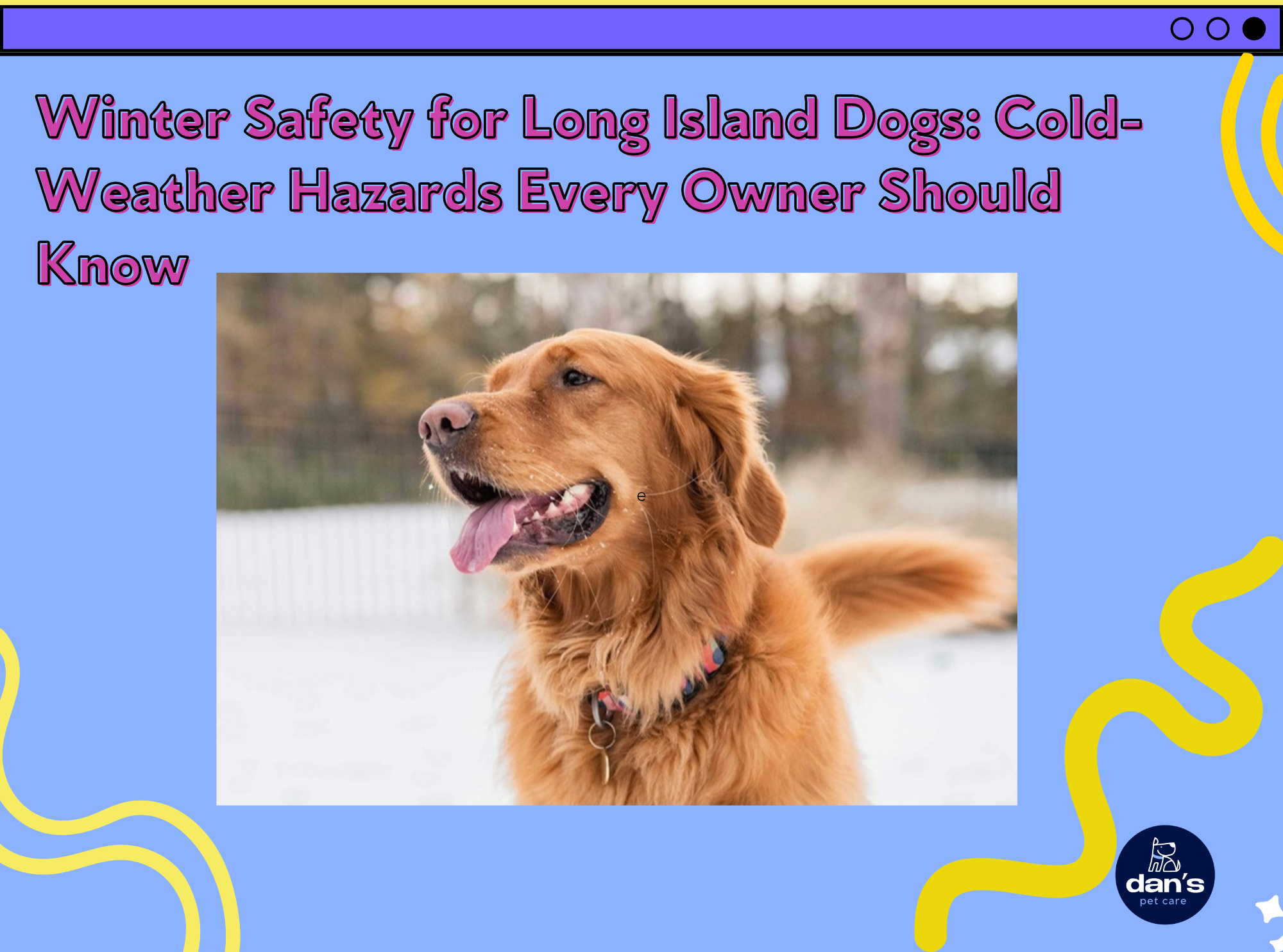
Once the temperature on Long Island drops toward winter, a dog walk looks different than it did in October. Daylight is shorter, driveways are slick with de-icing salt, and the air coming off the Sound or the ocean can cut right through a short coat. None of that means walks have to stop — it just means the routine needs a few adjustments.
Most cold-weather risks to dogs are easy to avoid once you know what to watch for. Here's a full rundown of the hazards Long Island dog owners should have on their radar this winter, and some simple ways Dan's Pet Care helps keep walks, yard time, and daycare days safe until spring.
Why Winter Walks Need a Different Approach
Cold alone isn't the only issue. Wind off the water, wet pavement that refreezes overnight, and sidewalks dusted with chemical de-icer all show up on a normal Long Island winter walk. Add in sunset arriving before most people get home from work, and a familiar route can suddenly feel a lot less predictable.
The coastal location that makes Long Island pleasant in the summer works against dogs in the winter — wind chill near the Sound and the ocean tends to run a few degrees colder than inland temperatures, and a breezy 25-degree day at the shoreline can feel more like the teens. A route that was perfectly comfortable a mile inland might be genuinely too cold near the water.
For Long Island dog owners, the fix isn't complicated — it's mostly about timing walks around the worst of the cold, dressing for the specific neighborhood a dog walks in, and knowing which hazards are seasonal rather than year-round.
Antifreeze: A Small Puddle With Big Consequences
Antifreeze has a sweet taste that dogs find appealing, which is exactly what makes it so dangerous. A small amount leaked onto a driveway or garage floor can be enough to cause serious kidney damage, and symptoms don't always show up right away.
Check driveways, curbs, and parking areas for puddles before letting a dog sniff around unsupervised, especially in neighborhoods with a lot of garages and street parking. If you ever suspect a dog has licked up antifreeze, treat it as an emergency and call a vet immediately rather than waiting to see if symptoms appear.
Road Salt and Ice Melt Can Hurt More Than Paws
Rock salt and chemical ice melt keep Long Island sidewalks walkable, but they're rough on paw pads and can cause cracking, irritation, and chemical burns after repeated exposure. Dogs often lick their paws after a walk, which means whatever they picked up on their feet can end up in their stomach too.
Rinsing and drying paws after every winter walk helps, and pet-safe ice melt products exist for owners who want to use something gentler around their own property. For Long Island dog owners walking on commercially treated sidewalks, a quick paw check after every outing is worth the extra minute.
Frostbite and Hypothermia: Know the Warning Signs
Ears, tails, and paws are the body parts most exposed to the cold and the most likely to develop frostbite, since blood flow naturally redirects to the body's core in freezing temperatures. Hypothermia can set in faster than most owners expect, especially in small dogs, puppies, and anything with a thin coat.
Keep an eye out for these warning signs during and after cold-weather walks:
Shivering that doesn't stop once indoors, or sluggish, uncoordinated movement
Pale, gray, or bluish skin on the ears, tail tip, or paw pads
Skin that feels unusually cold or hard to the touch
Whining, limping, or repeatedly lifting a paw off the ground
Unusual quietness or reluctance to keep moving on a walk
If any of these show up, warm the dog gradually and call a vet — frostbitten tissue can look deceptively normal for a day or two before the damage becomes obvious.
Short-Haired, Small, and Senior Dogs Feel the Cold Faster
Not every dog handles winter the same way. Breeds with short coats and little body fat, toy breeds, and senior dogs all lose body heat faster than a thick-coated working breed built for cold climates. A walk length that was comfortable in October might be too long once temperatures drop into the 30s.
Puppies run into a similar problem for a different reason — they haven't built up the fat reserves or coat thickness that help older dogs regulate their body temperature, so they can get cold faster than people expect even on a mild winter day. A shorter, more frequent walk schedule usually works better than one long outing for puppies and small or thin-coated adult dogs alike.
Watching for shivering or a dog that starts pulling toward home is usually the clearest sign a walk needs to be shorter, not a sign the dog is being stubborn.
Arthritis and Joint Pain Often Flare Up in Winter
Cold weather tends to stiffen joints, and older dogs with arthritis frequently feel it the most. A dog that's normally eager for a walk might hesitate at the door, move more slowly on stairs, or seem reluctant to jump onto furniture once temperatures drop.
Shorter, more frequent walks on flat ground are usually easier on stiff joints than one long outing, and a well-fitted sweater or coat can help an arthritic dog stay looser and more comfortable outside.
Walking in the Dark: Visibility Matters
With sunset arriving well before 5 p.m. for most of the winter, a lot of Long Island dog walks now happen in low light or full darkness. Reflective leashes, collars, and harnesses make a real difference for drivers and cyclists, and a small clip-on light helps on streets without sidewalks.
For Long Island dog owners in neighborhoods with limited street lighting, sticking to well-lit routes and avoiding unlit shortcuts through parks after dark is worth the extra few minutes.
Booties, Sweaters, and Paw Care
Booties aren't just for looks — they're a real barrier between sensitive paw pads and salt, ice, and cold pavement. Dogs that won't tolerate booties can still benefit from a paw balm or wax applied before a walk to protect against cracking.
A sweater or coat matters most for thin-coated breeds, small dogs, and seniors, but any dog spending extended time outside in freezing wind can benefit from one. Just make sure it fits well enough that it doesn't restrict movement or rub.
Never Leave a Dog in a Cold Car
Cars get talked about constantly in summer, but a parked car in winter can drop to near-outdoor temperature within minutes and offers no protection from the cold. A quick errand is still too long to leave a dog waiting in a freezing car.
If a dog needs to come along for a drive, plan for stops where it's safe to bring them inside or leave them at home instead.
Don't Forget the Water Bowl
Dogs can get dehydrated in winter just as easily as summer, but it's easy to overlook because nobody's sweating. Outdoor water bowls can freeze solid within an hour or two on a cold day, leaving a dog with nothing to drink between walks.
Checking and refreshing water bowls more often during cold snaps, and bringing outdoor bowls inside overnight, keeps a dog properly hydrated all season.
Indoor Days: Keeping Energy in Check When Walks Get Cut Short
On the coldest or iciest days, a shorter walk is the right call — but that often leaves extra energy that needs somewhere to go. Puzzle feeders, short indoor training sessions, and a bit of tug or fetch in a hallway can take the edge off when outdoor time is limited.
Scent games are an easy way to tire out a dog indoors without much space — hiding a few treats or a favorite toy around a room and letting a dog sniff them out burns mental energy the same way a long walk burns physical energy. Stairs, if a dog has healthy joints, are another compact way to work in a bit of cardio on a day when a full walk isn't practical.
For Long Island dog owners with especially active breeds, a few consecutive low-activity days can show up as restlessness or destructive behavior — a little extra indoor stimulation goes a long way toward heading that off.
How Dan's Pet Care Can Help
Winter is exactly when a reliable dog walking routine matters most. Dan's Pet Care walkers know how to read the weather, shorten a route when it's genuinely too cold, and check paws for salt and ice before heading back inside — all without a dog missing out on daily exercise and a bathroom break while an owner is at work.
On the days when outdoor time needs to be especially limited, doggy daycare gives dogs a safe, warm place to burn energy and socialize instead of spending a long day cooped up alone. It's a simple way to keep a dog's routine consistent even when the weather outside isn't cooperating.
Final Thoughts
Long Island winters bring a specific set of hazards, but almost all of them come down to the same few habits: checking for antifreeze and road salt, dressing dogs for their individual tolerance to cold, watching for warning signs of frostbite or hypothermia, and giving them a safe outlet for energy when walks get shorter. A little extra attention during the coldest months keeps dogs comfortable and safe all winter long.
If you want help keeping your dog's routine safe and consistent through the cold months, Contact Dan's Pet Care today.