
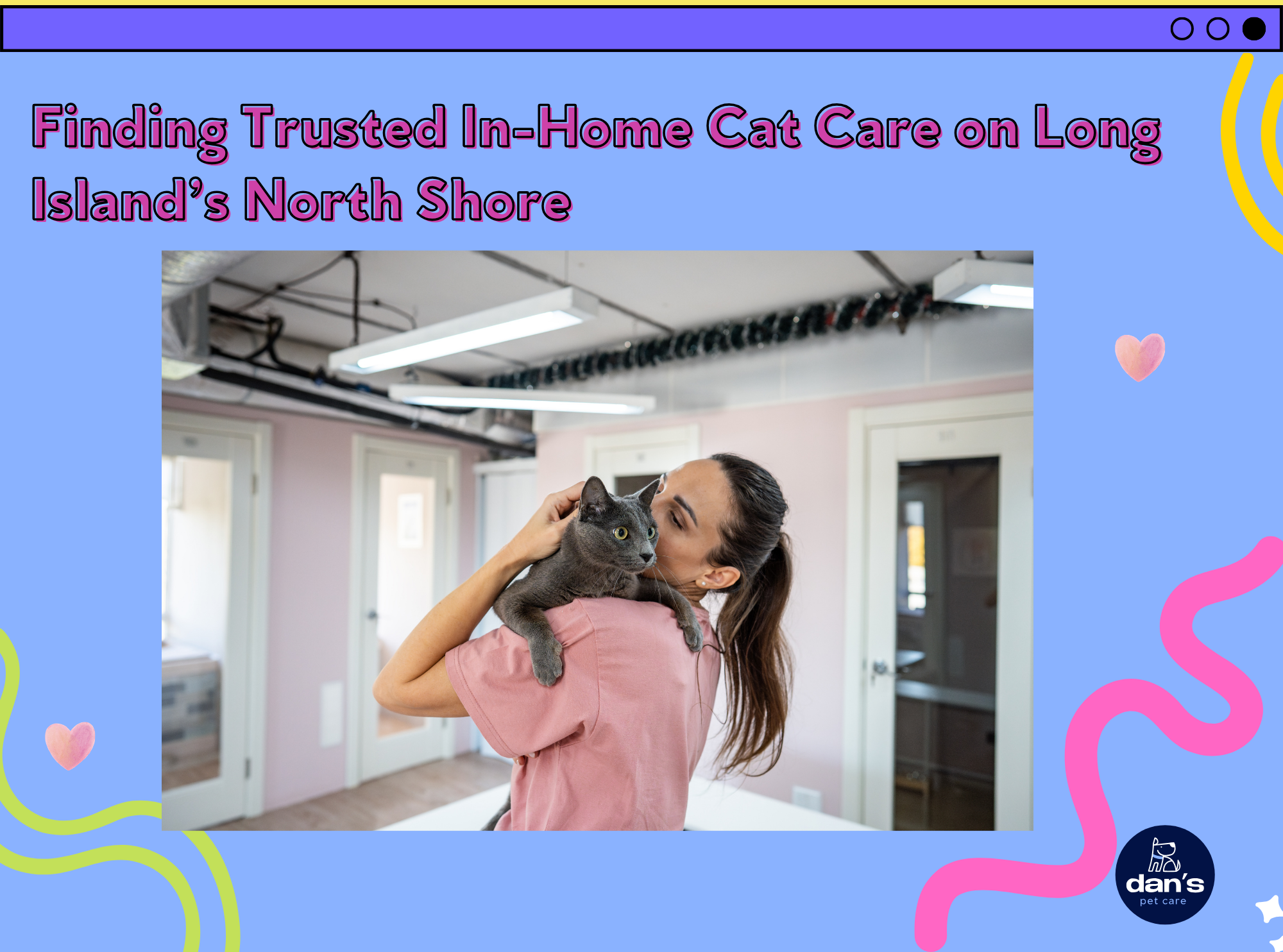
Finding the right cat sitter on Long Island can feel personal. Cats are deeply connected to their homes, routines, hiding spots, feeding schedules, and favorite people. When you travel, work long hours, or need support during a busy week, you want someone who will care for your cat with patience, reliability, and respect.
For many families on Long Island’s North Shore, in-home cat care is the most comfortable option. Instead of transporting your cat to a boarding facility, your cat can stay in a familiar space while receiving food, water, litter box care, attention, and wellness checks.
Dan’s Pet Care provides long island pet care services designed to help cats stay calm and cared for at home. Whether you need drop in cat care Nassau County families can trust, professional cat sitting Glen Cove residents can rely on, or support along the North Shore, this guide will help you know what to look for.
Why In-Home Cat Care Matters
Cats are creatures of habit. A small change in their environment can affect how they eat, sleep, groom, play, and use the litter box. While some cats adjust easily to new places, many feel safest when they remain in their own home.
In-home cat care allows your cat to stay surrounded by familiar smells, furniture, windows, beds, toys, and routines. This can reduce stress and help your cat feel more secure while you are away. For shy cats, senior cats, anxious cats, and cats with medical needs, staying home can make a meaningful difference.
A trusted cat sitter does more than refill a food bowl. They observe your cat’s behavior, maintain a clean environment, follow your instructions, and provide calm companionship based on your cat’s comfort level. The right care helps protect both your cat’s routine and your peace of mind.
What Is In-Home Cat Sitting?
In-home cat sitting means a professional sitter visits your home to care for your cat while you are away. These visits can be scheduled based on your cat’s needs, your travel plans, and your preferred routine.
A typical cat sitting visit may include feeding, fresh water, litter box cleaning, medication support, playtime, brushing, and a general wellness check. For social cats, visits may also include affection, lap time, or interactive play. For shy cats, a sitter may provide a calm presence while respecting boundaries.
This type of care is different from boarding because your cat does not need to leave home. They can sleep in their usual spot, use their own litter box, and follow their normal schedule. For many Long Island cat owners, that familiarity is the biggest benefit of hiring a cat sitter long island families can trust.
Why North Shore Cat Owners Prefer Home Care
Long Island’s North Shore includes busy families, commuters, professionals, retirees, and frequent travelers. In areas like Glen Cove, Sea Cliff, Locust Valley, Roslyn, Manhasset, Port Washington, Huntington, and nearby communities, many cat owners want care that fits their home-based routines.
In-home care is often easier than transporting a cat. Many cats dislike carriers, car rides, unfamiliar smells, and new environments. Even a short drive can cause stress for sensitive cats. Home care removes that challenge.
North Shore pet parents also value consistency. A cat who eats in the same kitchen, watches birds from the same window, and sleeps in the same favorite chair may feel much calmer when those routines stay in place.
Dan’s Pet Care supports local cat families by offering professional care that respects the way cats actually live. The goal is simple: less stress for your cat and more confidence for you.
Cat Sitter Long Island: What to Look For
When searching for a cat sitter Long Island pet parents can depend on, look for more than availability. The right sitter should be reliable, experienced, communicative, and comfortable with feline behavior.
Cats communicate differently than dogs. A good sitter understands that some cats need space, some need play, and some need time before they approach. They should know how to read signs of stress, comfort, appetite changes, litter box concerns, and unusual behavior.
A trusted cat sitter should also follow instructions carefully. Feeding amounts, medication details, litter preferences, hiding spots, and emergency contacts all matter. Your cat’s routine should be treated as important, not optional.
Before booking, ask about communication, visit updates, scheduling, home access, emergency procedures, and experience with cats like yours. Good care starts with clear expectations and a sitter who takes your cat’s comfort seriously.
Benefits of Drop In Cat Care Nassau County
Drop in cat care Nassau County pet parents rely on can be ideal for cats who need regular check-ins without overnight care. During a drop-in visit, a sitter comes to your home, completes your cat’s care routine, and checks that everything looks normal.
This service works well for many healthy adult cats, especially those who are comfortable spending quiet time at home between visits. It can also help families who are away for a weekend, working long hours, or managing unpredictable schedules.
Common benefits include:
Your cat stays in a familiar home environment
Feeding and litter routines stay consistent
Fresh water is checked and replaced
Your cat receives attention based on their comfort level
Your home gets an extra check while you are away
You receive peace of mind through professional support
For many cats, drop-in care offers the right balance of independence and supervision.
Professional Cat Sitting Glen Cove Families Can Trust
Professional cat sitting Glen Cove families can trust should feel organized, thoughtful, and personal. Glen Cove and the surrounding North Shore communities include many cat owners who want local support from a team that understands the area and values dependable service.
Professional care means your sitter arrives with a clear plan. They know what your cat eats, where supplies are stored, how often the litter box should be cleaned, and what behavior changes to watch for. They also know when to contact you if something seems unusual.
This level of care is especially important for cats who are older, shy, on medication, or particular about their routines. A professional sitter should not rush the visit or treat your cat like a checklist.
Dan’s Pet Care helps Glen Cove cat parents feel confident that their cats are receiving patient, reliable, and respectful care at home.
How In-Home Care Reduces Cat Stress
Many cats feel safest in their own territory. Their home is filled with familiar scents, safe hiding spots, known sounds, and predictable routines. Removing a cat from that environment can be stressful, especially for cats who are cautious, senior, or anxious.
In-home care reduces stress by keeping the environment stable. Your cat does not have to ride in a carrier, adjust to a new space, hear unfamiliar animals, or sleep somewhere strange. Instead, they can continue their daily patterns with support from a sitter.
This can help reduce stress-related issues such as hiding, appetite changes, overgrooming, vocalizing, or litter box accidents. While no care option removes every possible stressor, home-based care often feels more natural for cats.
The best sitter will also move at your cat’s pace, offering interaction when welcome and space when needed.
Signs Your Cat May Prefer In-Home Care
Some cats clearly show that in-home care is the best option. If your cat dislikes travel, hides from visitors, panics in a carrier, or becomes stressed in new environments, staying home may be the calmer choice.
In-home cat sitting may be especially helpful if your cat:
Hides when unfamiliar people visit
Gets sick or stressed during car rides
Refuses food in new places
Has a strict feeding or medication routine
Is senior, anxious, shy, or medically sensitive
Lives with other cats who should stay together
Becomes unsettled after boarding or travel
These behaviors do not mean your cat is difficult. They mean your cat feels safest with routine and familiar surroundings.
Dan’s Pet Care can help support cats who need patience, gentle handling, and a care plan that respects their personality.
What Happens During a Cat Sitting Visit?
A cat sitting visit should be organized around your cat’s normal routine. Before care begins, you should provide clear instructions about feeding, water, litter, medication, play preferences, hiding places, and emergency contacts.
During a visit, the sitter may refresh food and water, clean the litter box, check your cat’s general condition, and provide attention or playtime. They may also check that doors, windows, and key areas of the home look secure.
For social cats, the visit may include brushing, toys, cuddles, or conversation. For shy cats, the sitter may quietly confirm they are safe and avoid forcing contact.
A quality cat sitting visit is not only about completing tasks. It is about noticing details. Is your cat eating? Using the litter box? Acting normally? Those observations matter while you are away.
How Often Should a Cat Sitter Visit?
The right visit frequency depends on your cat’s age, health, feeding routine, litter box habits, and personality. Many healthy adult cats do well with one visit per day, while others may need two visits daily or more specialized care.
Cats who eat wet food, take medication, need insulin, have health concerns, or become lonely may need more frequent visits. Kittens and senior cats may also require extra attention.
For drop in cat care Nassau County families should think beyond food. Litter boxes need cleaning, water should be refreshed, and your cat’s behavior should be checked regularly.
A helpful care plan may include:
One daily visit for many healthy adult cats
Two daily visits for cats with wet food or medication needs
Extra visits for kittens, seniors, or anxious cats
Longer visits for cats who need play and companionship
Preparing Your Home for a Cat Sitter
Preparing your home makes cat sitting smoother and safer. A sitter should be able to find supplies easily and follow your cat’s routine without confusion.
Before you leave, place food, treats, bowls, litter, scoop, cleaning supplies, medication, and toys in clear locations. Write down feeding amounts, visit preferences, medication instructions, litter box details, and emergency contacts.
Make sure your sitter knows your cat’s hiding spots and normal behavior. If your cat often hides under the bed, that may be normal. If your usually social cat suddenly hides, that may be important.
Helpful preparation steps include:
Leave written instructions
Provide vet and emergency contacts
Stock enough food, litter, and medication
Share your cat’s favorite hiding spots
Confirm home access and alarm details
Note anything unusual about your cat’s routine
Keeping Your Cat Comfortable While You Travel
Small details can help your cat feel more comfortable while you are away. Keep their environment as normal as possible. Avoid moving litter boxes, changing food, washing all bedding, or introducing new products right before your trip.
Leave favorite blankets, beds, scratching posts, and toys where your cat expects them. If your cat enjoys background noise, you may leave a radio or familiar household sound at a low volume. Window perches and safe viewing spots can also help cats stay entertained.
For cats who enjoy play, leave interactive toys that are safe for solo use. Avoid toys with strings, loose parts, or anything that could become a choking hazard when unsupervised.
When your cat’s routine stays predictable, the sitter’s visits can feel like a normal part of the day instead of a major disruption.
Communication and Visit Updates
Good communication is one of the most important parts of professional cat sitting. When you are away, you should not have to wonder whether your cat has eaten, used the litter box, or seemed comfortable.
A trusted sitter should provide updates based on the care plan. These may include notes about feeding, water, litter box use, mood, playtime, hiding, medication, or anything unusual. Photos can also help reassure pet parents that their cat is safe and comfortable.
Communication is especially important for cats who are shy, senior, medicated, or prone to stress. Small changes may matter.
Before booking, ask how updates are handled and what happens if the sitter notices a concern. Dan’s Pet Care values clear communication so Long Island cat parents can feel connected and informed while they are away.
Safety Questions to Ask a Cat Sitter
Before hiring a sitter, ask questions that help you understand their process. A professional should be comfortable explaining how they care for cats, handle emergencies, and communicate with pet parents.
Important questions include:
What is included in each visit?
How do you handle shy or hiding cats?
Can you follow medication instructions?
How will I receive updates?
What happens if my cat seems sick?
Do you check food, water, litter, and home safety?
How do you manage keys, alarms, and access?
These questions help you choose care with confidence. They also help your sitter understand what matters most to you.
The best long island pet care services should feel professional, respectful, and transparent from the first conversation.
Why Local Experience Matters on Long Island
Local experience matters because Long Island families need pet care that fits their real schedules, neighborhoods, and travel patterns. North Shore residents may commute, travel through airports, spend weekends away, or need care during busy workweeks.
A local provider understands the importance of reliability. Timing matters when cats need medication, wet food, or regular litter box care. Weather can also affect travel and visit planning, especially during winter storms, heavy rain, or summer heat.
Professional cat sitting Glen Cove and nearby North Shore communities can rely on should combine local knowledge with consistent care standards. You want a sitter who treats each visit as important and understands that cats depend on routine.
Dan’s Pet Care provides local support for Long Island cat owners who want dependable care close to home.
Why Choose Dan’s Pet Care for Cat Sitting?
Dan’s Pet Care offers in-home cat sitting and long island pet care services designed around comfort, safety, and trust. We understand that cats are not all the same. Some want play and affection. Others want a quiet visit, a clean litter box, and space.
Our team supports cat parents across Long Island’s North Shore, including Glen Cove and surrounding Nassau County communities. Whether you need drop-in visits during vacation, professional cat sitting while you work, or reliable help for a senior cat, we focus on your cat’s individual routine.
Families choose Dan’s Pet Care because they want care that is organized, compassionate, and local. Your cat’s feeding, litter, medication, play, and comfort instructions matter.
With the right sitter, your cat can stay in their familiar home while you travel with more peace of mind.
Choosing Trusted Cat Care on the North Shore
Finding a trusted cat sitter Long Island families can rely on is about more than convenience. It is about choosing someone who understands cats, respects routines, communicates clearly, and treats your home and pet with care.
For many cats, in-home care is the most comfortable choice. It keeps them in a familiar environment, reduces travel stress, supports normal routines, and gives them personalized attention. Whether your cat is playful, shy, senior, social, or independent, the right sitter can help them feel safe while you are away.
Dan’s Pet Care provides drop in cat care Nassau County residents can trust, professional cat sitting Glen Cove families can feel confident about, and long island pet care services built around real pet needs.
When your cat is cared for at home by a trusted professional, you can focus on your trip knowing they are comfortable, safe, and supported.