Dogs communicate with us all the time, but they do it mostly without words. From the tip of the tail to the set of the ears, your dog is constantly sharing how they feel. Learning to read this silent language helps you understand your dog, strengthen your bond, and respond to their needs before small issues become big ones.
A dog who feels understood is calmer and more confident. Whether you are walking through your Long Island neighborhood or relaxing at home, knowing what your dog is telling you makes life better for both of you. In this guide, we will break down the key signals every Long Island dog owner should know.
Why Reading Body Language Matters
Understanding your dog’s body language is one of the most valuable skills you can develop as an owner. It lets you recognize when your dog is happy, nervous, excited, or uncomfortable, often before their feelings turn into behavior problems. This insight helps you keep your dog safe and build a relationship based on trust.
Many misunderstandings between people and dogs come from missed signals. A dog who growls, for example, is usually communicating discomfort they showed in quieter ways first. By learning to read these cues, you can respect your dog’s boundaries and prevent stressful situations. For Long Island dog owners, this understanding leads to a calmer, happier dog and a stronger connection.
Reading the Tail
The tail is one of a dog’s most expressive features, but a wagging tail does not always mean a happy dog. The position and speed of the wag tell the real story. A loose, sweeping wag at mid height usually signals a friendly, relaxed dog, while a high, stiff wag can indicate alertness or tension.
A tail tucked low or between the legs suggests fear or anxiety, and a tail held very high and rigid may signal arousal or a dog who feels challenged. Watching the whole picture, not just the wag, is key. For Long Island dog owners, learning to read tail signals offers an immediate window into how your dog is feeling.
Ears and What They Signal
A dog’s ears reveal a great deal about their emotional state, even though ear shapes vary widely between breeds. Ears held in a natural, neutral position usually indicate a relaxed dog. Ears perked forward show interest and alertness, as your dog focuses on something that has caught their attention.
Ears pinned back flat against the head often signal fear, anxiety, or submission, though a gentle backward tilt can also accompany a friendly greeting. Context matters, so read the ears alongside the rest of the body. For Long Island dog owners, paying attention to ear position helps you gauge your dog’s comfort level in different situations and respond appropriately.
Eyes and Facial Expressions
Your dog’s eyes communicate volumes once you know what to look for. Soft, relaxed eyes with a normal amount of visible white indicate a calm, comfortable dog. Gentle eye contact often reflects a trusting bond. A relaxed face with a slightly open mouth usually signals a content, easygoing dog.
Watch for whale eye, where your dog shows the whites of their eyes as they look sideways, since this often signals stress or discomfort. A hard, fixed stare can be a warning sign of tension. Learning to read your dog’s eyes and face helps Long Island owners recognize their dog’s mood and avoid pushing them past their comfort zone.
Mouth, Lips, and Yawning
A dog’s mouth offers subtle but important clues. A relaxed, slightly open mouth, sometimes called a soft smile, usually indicates a happy, comfortable dog. Panting can mean your dog is hot or has been exercising, but rapid panting in a cool, calm setting may signal stress or anxiety.
Yawning and lip licking outside of mealtime or sleepiness are common calming signals that indicate your dog feels uneasy. Tightly closed lips or a tense mouth can signal discomfort. Bared teeth are a clear warning to give space. For Long Island dog owners, noticing these mouth signals helps you catch stress early and keep interactions positive.
Overall Body Posture
Your dog’s overall posture ties every other signal together. A relaxed dog carries a loose, wiggly body with weight balanced naturally. A dog leaning forward with weight on their front legs is showing interest or arousal, while a dog crouching low or leaning back may be fearful or unsure.
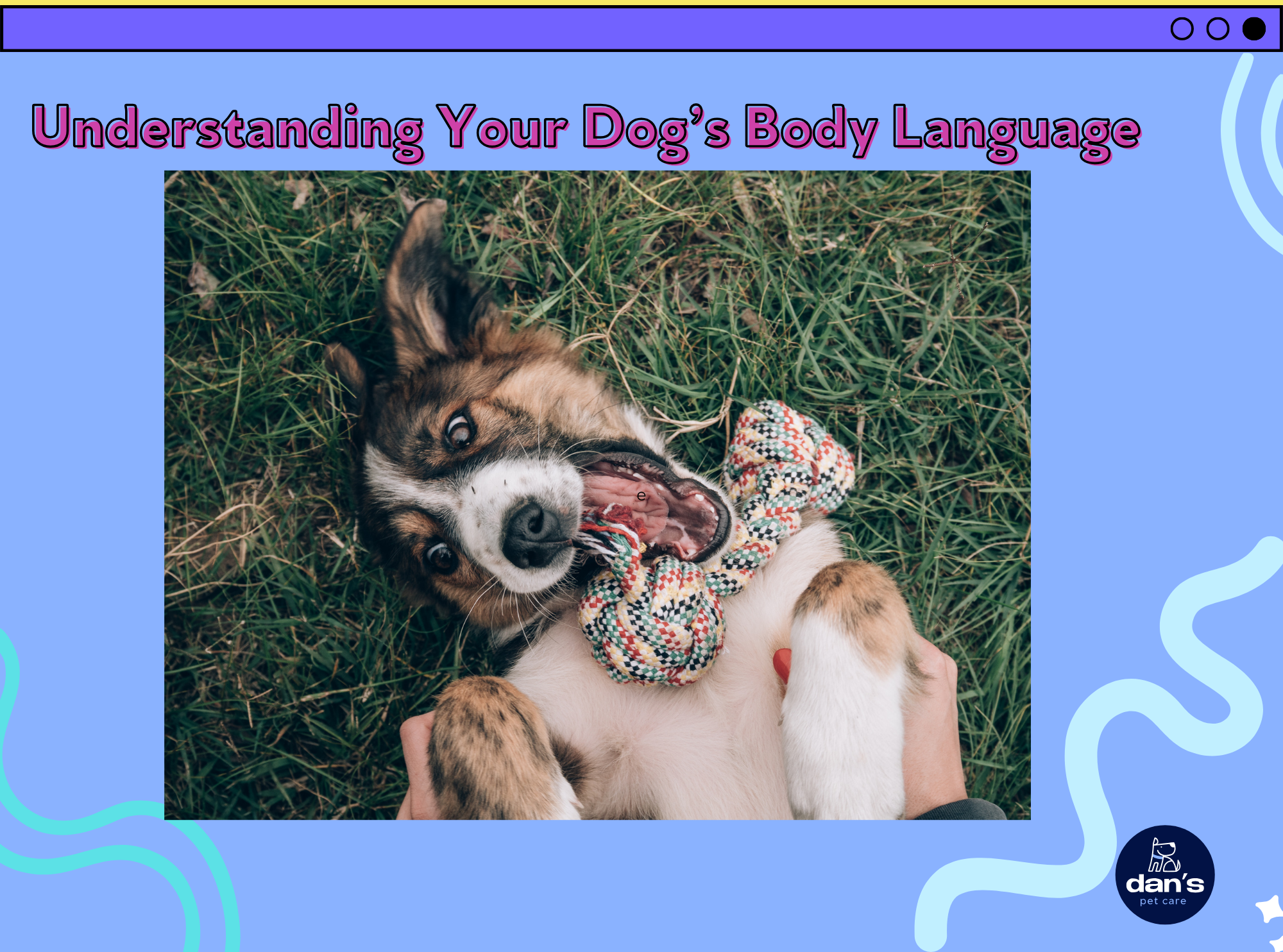
A stiff, frozen body is an important signal that your dog feels threatened and needs space. A dog rolling onto their back may be relaxed and inviting a belly rub, or may be showing appeasement, depending on context. Reading the whole body rather than one part gives Long Island owners the clearest picture of how their dog truly feels.
Play Bows and Happy Signals
One of the most delightful pieces of dog body language is the play bow, where a dog lowers their front end while keeping their rear up in the air. This is a clear invitation to play and a sign of a happy, social dog. It often comes with a wagging tail and a loose, bouncy body.
Other happy signals include a relaxed open mouth, a soft gaze, and a wiggly overall posture. Dogs use these cues to communicate friendly intentions to people and other dogs. Recognizing play behavior helps you tell the difference between fun and conflict. For Long Island owners, understanding these joyful signals makes playtime safer and more enjoyable for everyone.
Signs of a Relaxed, Happy Dog
A content, comfortable dog shows a collection of relaxed signals. Recognizing these signs reassures you that your dog feels safe and happy in their environment. A relaxed dog is a joy to be around and a good indicator that their needs are being met.
• A loose, wiggly body and relaxed posture
• A soft, gently wagging tail at mid height
• Relaxed ears in a natural position
• Soft eyes and a relaxed, slightly open mouth
• A willingness to engage and play
When you see these signals, you can feel confident your dog is comfortable. For Long Island dog owners, these happy signs are a rewarding reminder of a trusting, healthy relationship.
Signs of Fear or Anxiety
Recognizing fear and anxiety in your dog allows you to help them feel safe. Dogs often show subtle stress signals before they react more strongly, so learning these cues lets you step in early. Addressing fear calmly prevents it from growing into bigger behavior problems.
• A tucked tail and lowered body
• Ears pinned back and a tense face
• Whale eye, showing the whites of the eyes
• Trembling, panting, or excessive drooling
• Trying to hide, retreat, or escape
If your dog shows these signs, give them space and remove the source of stress if you can. For Long Island dog owners, responding calmly to fear helps your dog feel secure and builds their long term confidence.
Understanding Calming Signals
Dogs use a set of behaviors known as calming signals to communicate that they feel uneasy and to defuse tension. These subtle cues are easy to miss, but they are your dog’s way of saying they need a moment. Recognizing them helps you avoid pushing your dog too far.
Common calming signals include yawning, lip licking, turning the head or body away, sniffing the ground suddenly, and moving slowly. A dog offering these signals is not being stubborn or distracted. They are managing their own stress. For Long Island owners, respecting calming signals by giving your dog a break builds trust and prevents fearful or reactive behavior over time.
Warning Signs and Aggression
It is essential to recognize when a dog is giving warning signals, since these communicate that a dog feels threatened and may react if pushed further. Understanding these signs keeps everyone safe and helps you respond appropriately by creating space rather than escalating the situation.
Warning signs include a stiff, frozen body, a hard stare, raised hackles, growling, snarling, and bared teeth. These behaviors are a dog’s way of asking for distance, and they should never be punished, since punishment can suppress the warning and lead to a bite without notice. For Long Island owners, respecting these signals and seeking professional help when needed is the safest approach.
Dog Vocalizations
While body language is a dog’s primary form of communication, vocalizations add helpful context. Dogs use a range of sounds to express themselves, and learning your dog’s vocal patterns helps you understand what they need in different situations.
• Barking, which can signal excitement, alertness, or distress
• Whining, often asking for attention or expressing anxiety
• Growling, a clear signal of discomfort or warning
• Howling, sometimes a response to sounds or separation
Paying attention to these sounds alongside body language gives you a fuller understanding of your dog. For Long Island owners, tuning in to both helps you respond to your dog’s true needs.
Body Language During Long Island Walks
Walks are full of body language, and reading your dog on the go helps keep outings positive. A relaxed dog walks with a loose body, sniffs freely, and moves comfortably. Watch for signs of stress like a tucked tail, freezing, or a sudden hard stare, which may signal your dog has noticed something worrying.
If your dog shows discomfort around another dog, person, or noise, calmly create more distance before they react. Reward relaxed behavior to build positive associations. On busy Long Island streets full of sights and sounds, reading your dog’s signals lets you guide them past distractions calmly and keep every walk a good experience.
Body Language Between Dogs
When dogs meet each other, they communicate through a rich exchange of body language. Learning to read these interactions helps you tell friendly play from rising tension. Relaxed, loose bodies, play bows, and taking turns chasing are signs of healthy play between dogs.
Warning signs include stiff postures, one dog repeatedly pinning another, raised hackles, or a dog trying to retreat while another persists. If you see these, calmly interrupt and give the dogs a break. Recognizing these signals helps prevent conflict. For Long Island owners, understanding dog to dog body language keeps playdates and social encounters safe and enjoyable.
When Body Language Signals a Health Issue
Changes in body language and behavior can sometimes point to a health problem. Dogs often hide pain, so subtle shifts are worth noticing. A normally active dog who becomes withdrawn, or a relaxed dog who suddenly seems tense or irritable, may be telling you that something hurts.
Watch for a hunched posture, reluctance to move, changes in appetite or activity, or unusual sensitivity to touch. If you notice these changes, contact your Long Island veterinarian. Paying attention to your dog’s body language can help you catch health issues early, when they are most treatable, and ensure your dog gets the care they need.
How a Professional Reads Your Dog
A skilled dog walker or pet care professional understands canine body language and uses it to provide better, safer care. When handling your dog, a good professional reads your dog’s signals to know when to offer encouragement, when to give space, and whether your dog is comfortable and enjoying themselves.
This attentiveness matters, especially while you are away. A professional who notices signs of stress or discomfort can adjust their approach and keep your dog calm and happy. For Long Island dog owners, working with people who truly understand dog body language provides peace of mind that your dog is being cared for with genuine insight.
How Dan’s Pet Care Can Help
At Dan’s Pet Care, our trained, insured Pet Care Specialists understand canine body language and use it to keep Long Island dogs comfortable and happy. Our dog walking services and dog training services are built around reading and respecting each dog’s individual signals.
Whether your dog is confident or a little nervous, we tailor our approach to their comfort level. By tuning in to what your dog is telling us, we build trust, reduce stress, and provide the kind of attentive care that keeps your dog feeling safe and understood.
Final Thoughts
Your dog is always communicating through their tail, ears, eyes, posture, and voice. By learning to read these signals, you deepen your bond and become a better advocate for your dog. Understanding body language turns everyday moments into a real conversation with your companion here on Long Island.
Want dog savvy care from people who truly understand your pup? Contact Dan’s Pet Care today to build a walking or training plan around your dog’s needs.