
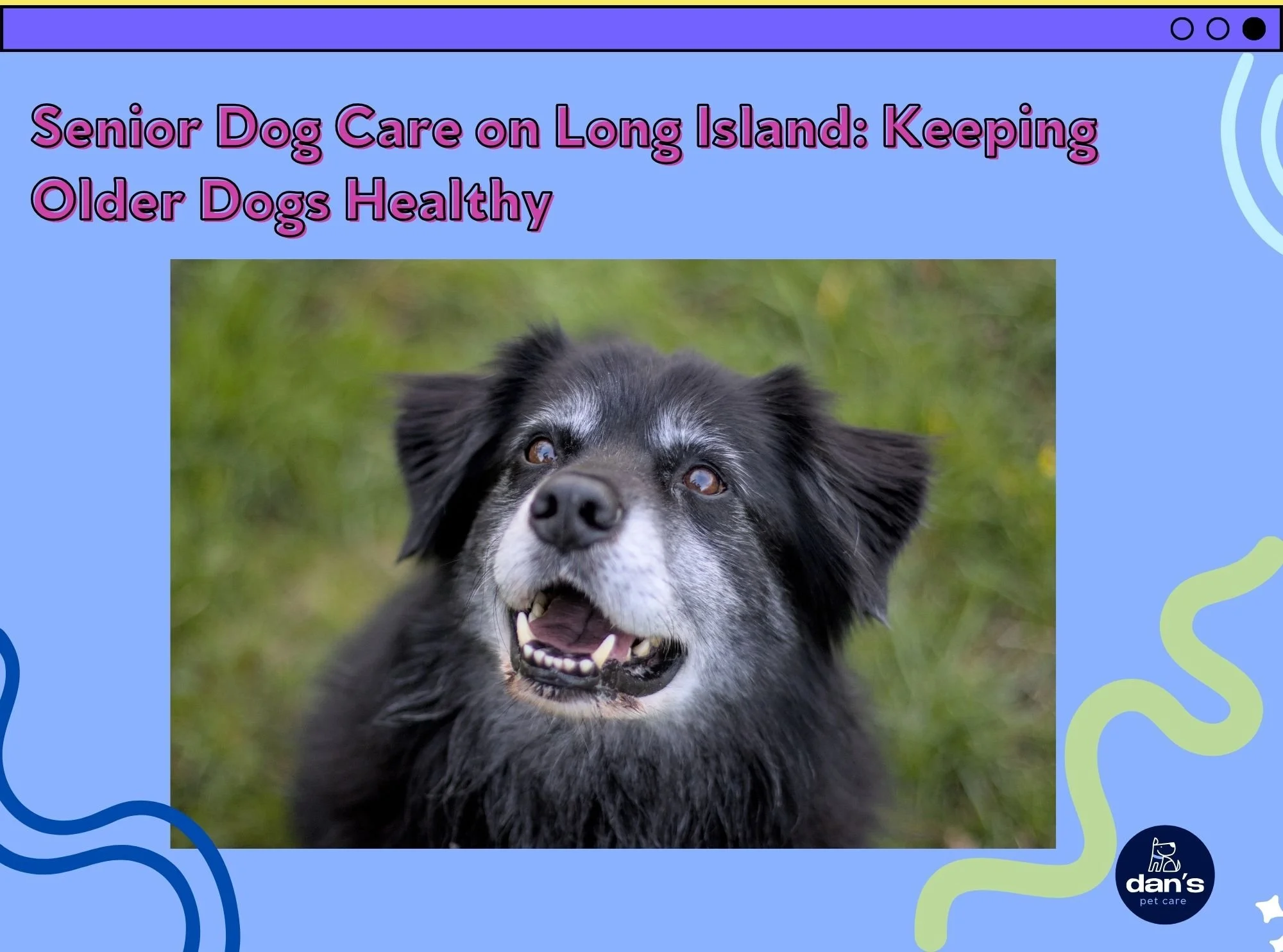
Our dogs give us years of loyalty and love, and as they enter their senior years, they deserve extra care and attention. Older dogs have changing needs, and small adjustments to their routine can keep them comfortable, happy, and healthy for as long as possible. Aging is a natural process, not a problem to fear.
With thoughtful care, many senior dogs enjoy wonderful quality of life well into their later years. This guide covers what Long Island dog owners need to know about caring for an aging companion, from nutrition and exercise to comfort and companionship.
When Is a Dog Considered Senior?
Dogs are generally considered senior in the last quarter of their expected lifespan, though the exact age varies by size and breed. Large breeds tend to age faster and may be seniors around six or seven, while small breeds often stay youthful longer and reach senior status closer to ten.
Rather than focusing only on a number, watch for the signs of aging in your individual dog. Every dog ages differently, and some remain playful and energetic well into their senior years. Knowing that your Long Island dog is entering this stage helps you adjust their care proactively, so you can support their health and comfort before problems arise.
Common Signs of Aging
Recognizing the signs of aging helps you respond to your dog’s changing needs. Physical and behavioral changes often appear gradually, so it helps to know what to watch for.
• Slowing down or reluctance to exercise
• Stiffness, especially after rest
• Graying fur, particularly around the muzzle
• Changes in weight, appetite, or thirst
• Cloudy eyes or reduced hearing
• More sleep and changes in sleep patterns
If you notice these changes, mention them to your Long Island veterinarian. Many age related conditions are manageable, especially when caught early, so regular observation is an important part of senior dog care.
Adjusting Exercise for Older Dogs
Senior dogs still need regular exercise, but their routine should be gentler than in their younger years. Shorter, more frequent walks are often better than long, strenuous outings. Movement keeps joints mobile, supports a healthy weight, and provides valuable mental stimulation.
Pay attention to your dog’s energy and comfort, and adjust the pace and distance accordingly. On hot or icy Long Island days, keep walks short and choose comfortable times. Low impact activities like gentle strolls and light play are ideal. The goal is to keep your senior dog active and engaged without overtaxing an aging body, so they stay strong and content.
Senior Dog Nutrition
Nutrition plays a big role in healthy aging. Many senior dogs benefit from food formulated for their life stage, which supports joint health, digestion, and a healthy weight. As dogs slow down, their calorie needs often decrease, so portion control becomes important to prevent weight gain.
Talk with your Long Island veterinarian about the best diet for your senior dog, especially if they have health conditions that require special nutrition. Fresh water should always be available. The right diet helps your older dog maintain muscle, energy, and a healthy weight, all of which contribute to a longer, more comfortable life by your side.
Joint and Mobility Support
Joint stiffness and arthritis are common in older dogs, but there is a lot you can do to keep your dog comfortable. Orthopedic beds provide cushioned support for aching joints, and ramps or steps help dogs reach favorite spots without straining. Keeping nails trimmed also improves footing.
Non slip rugs on slippery floors give your senior dog better traction and confidence. Your veterinarian may recommend supplements or other support for joint health. Gentle, regular movement also helps keep joints mobile. These small changes around your Long Island home can make a big difference in how comfortably your senior dog moves through their day.
Regular Veterinary Checkups
Senior dogs benefit from more frequent veterinary visits. While younger dogs typically see the vet once a year, older dogs often do better with checkups every six months. These visits allow your vet to catch age related conditions early, when they are most treatable.
Routine bloodwork and exams can detect issues like kidney disease, thyroid problems, and other conditions before they become serious. Staying on top of preventive care gives your senior dog the best chance at a long, comfortable life. Partner with your Long Island veterinarian to create a monitoring plan tailored to your dog’s age and health.
Dental Care for Older Dogs
Dental health is easy to overlook, but it matters a great deal for senior dogs. Dental disease is common in older pets and can cause pain, affect eating, and even impact overall health. Keeping your dog’s mouth healthy contributes to their comfort and wellbeing.
Regular tooth brushing, dental chews, and professional cleanings recommended by your vet all help. Watch for signs of dental trouble like bad breath, difficulty eating, or pawing at the mouth. Addressing dental issues promptly keeps your senior dog comfortable and eating well. Good oral care is a simple but meaningful part of supporting your aging Long Island companion.
Mental Stimulation for Senior Dogs
A sharp mind matters just as much as a healthy body. Mental stimulation helps keep senior dogs engaged and can slow cognitive decline. Gentle puzzle toys, food dispensing toys, and short training games give your dog’s brain a workout without physical strain.
Keep activities appropriate for your dog’s energy and abilities, and celebrate their successes. New but manageable experiences, like a sniff walk in a different part of your Long Island neighborhood, provide enriching mental exercise. Keeping your senior dog mentally active supports their quality of life and keeps that special spark in their eyes as they enjoy their golden years.
Creating a Comfortable Home Environment
As dogs age, their home environment becomes even more important. Simple adjustments can make daily life easier and more comfortable for your senior dog. Soft, supportive bedding in a warm, draft free spot gives aching joints a cozy place to rest.
Keep food, water, and the potty area easily accessible, and consider nightlights if your dog’s vision is declining. Maintaining a predictable environment helps senior dogs who may feel less secure as they age. Thoughtful touches around your Long Island home show your dog they are loved and cared for, and they help your companion feel safe and settled every day.
Watching for Health Changes
Senior dogs can develop health issues more quickly, so attentive observation is key. You know your dog best, and noticing subtle changes early allows for prompt care. Keep an eye on appetite, thirst, energy, bathroom habits, mobility, and behavior.
• Sudden changes in appetite or thirst
• New lumps, bumps, or swelling
• Difficulty standing, walking, or climbing stairs
• Changes in bathroom habits or accidents
• Confusion, restlessness, or altered sleep
If you notice anything concerning, contact your Long Island veterinarian promptly. Early attention often leads to better outcomes and helps keep your senior dog comfortable and healthy.
How Professional Care Supports Senior Dogs
Senior dogs thrive on consistency and gentle attention, which can be hard to provide during a busy day. A professional caregiver can offer gentle walks tailored to your dog’s pace, midday potty breaks, and companionship that eases the loneliness some older dogs feel when left alone.
Regular, familiar care also means someone is keeping an eye on your dog and can spot changes in mobility or behavior early. For Long Island families, professional support helps maintain the steady routine that senior dogs depend on, ensuring your older companion stays comfortable, engaged, and cared for even when life gets hectic.
Managing Your Senior Dog’s Weight
Maintaining a healthy weight is one of the most important things you can do for your senior dog. Extra weight puts stress on aging joints and can worsen conditions like arthritis, while being underweight may signal an underlying health issue. Keeping your dog at an ideal weight supports their mobility, comfort, and overall health.
As dogs age and slow down, their calorie needs often decrease, so portion adjustments may be necessary. Work with your Long Island veterinarian to determine the right weight and diet for your dog. Monitor their body condition regularly. Managing your senior dog’s weight thoughtfully helps them stay active and comfortable, contributing to a longer, higher quality life by your side.
Gentle Grooming for Older Dogs
Senior dogs benefit from regular, gentle grooming, which keeps their coat and skin healthy and gives you a chance to check for changes. Older dogs may be less able to groom themselves and can develop matting, dry skin, or other issues. Regular brushing keeps them comfortable and lets you spot problems early.
Be gentle around sensitive areas and stiff joints, and keep grooming sessions calm and positive. Grooming is also a great time to check for new lumps, skin changes, or signs of discomfort. Keep nails trimmed, since long nails affect a senior dog’s footing. For Long Island owners, gentle grooming supports your senior dog’s comfort and health while offering quality bonding time.
Keeping the Routine Consistent
Senior dogs find comfort in routine, and a predictable daily schedule helps them feel secure. As dogs age, they may become less adaptable to change, so maintaining consistency in feeding, walks, and rest supports their emotional wellbeing. A steady routine also makes it easier to notice when something is off.
Try to keep meals, potty breaks, and gentle exercise at similar times each day. If changes are necessary, introduce them gradually. Consistency is especially reassuring for senior dogs who may be experiencing changes in their senses or cognition. For Long Island owners, maintaining a familiar routine helps your senior dog feel safe and settled, which contributes to their comfort and happiness.
Companionship and Emotional Wellbeing
Emotional wellbeing matters just as much as physical health for senior dogs. Older dogs still crave companionship and can feel lonely or anxious when left alone for long periods. Spending quality time with your senior dog, offering gentle affection and attention, supports their emotional health and strengthens your bond.
Long stretches of isolation can be hard on senior dogs, who may become more dependent on their people as they age. A midday visit or companionship while you are away helps prevent loneliness. For Long Island families, ensuring your senior dog has regular companionship keeps their spirits up and their emotional needs met, which is a vital part of caring for an aging companion.
Supplements and Vet Recommended Support
Many senior dogs benefit from supplements or other support recommended by their veterinarian. Joint supplements, for example, are commonly suggested to help dogs with arthritis or stiffness. Your vet may also recommend specific support based on your dog’s individual health needs and any conditions they have developed.
Always consult your Long Island veterinarian before starting any supplement, since the right choices depend on your dog’s health. Never assume more is better, and follow your vet’s guidance on dosing and products. A tailored approach ensures your senior dog gets the support that genuinely helps them. Working closely with your vet helps you make informed decisions that keep your aging dog comfortable.
Recognizing Cognitive Changes
Just like people, dogs can experience cognitive changes as they age. Some senior dogs develop signs of cognitive decline, which may include confusion, disrupted sleep, restlessness, or changes in interaction. Recognizing these signs helps you support your dog and seek appropriate care from your veterinarian.
Watch for behaviors like staring at walls, getting stuck in corners, seeming disoriented in familiar places, or changes in sleep patterns. If you notice these signs, talk with your Long Island veterinarian, since there are ways to help. Maintaining routine, providing gentle mental stimulation, and creating a safe environment all support a dog with cognitive changes and help them feel secure.
Making Everyday Life Easier
Small changes around your home can make everyday life much easier for a senior dog. Non slip rugs help dogs with weak or stiff legs keep their footing on slippery floors. Ramps or steps assist dogs who struggle to climb onto furniture or into the car, reducing strain on aging joints.
Raised food and water bowls can be more comfortable for dogs with neck or joint stiffness, and orthopedic bedding cushions sore bodies. Keeping essentials easily accessible means your dog does not have to work hard to meet basic needs. For Long Island owners, these thoughtful adjustments help your senior dog navigate daily life with greater comfort and confidence.
Cherishing Quality Time
The senior years are a precious time to cherish with your dog. While caring for an aging companion comes with extra responsibilities, it also offers a chance to deepen your bond and appreciate the years you have shared. Slowing down together can be its own kind of gift.
Enjoy gentle walks, quiet moments, and the comfort of each other’s company. Adapt activities to your dog’s abilities, focusing on comfort and connection rather than intensity. Every senior dog deserves to feel loved and valued in their golden years. For Long Island families, savoring this special time with your longtime companion makes the extra care you provide all the more meaningful.
How Dan’s Pet Care Can Help
Dan’s Pet Care provides gentle, attentive support for senior dogs across Long Island. Our dog walking services can be tailored to your older dog’s comfortable pace, and our in-home pet sitting offers companionship and steady routines when you are away.
Our trained, insured Pet Care Specialists understand the needs of aging dogs and treat every senior with patience and care. We keep your dog comfortable, watch for changes, and provide the loving attention your longtime companion deserves in their golden years.
Final Thoughts
Caring for a senior dog is a privilege that comes with a few extra responsibilities. With gentle exercise, proper nutrition, regular vet care, and a comfortable home, you can help your older dog enjoy their golden years to the fullest right here on Long Island.
Want compassionate support for your senior dog? Contact Dan’s Pet Care today to build a gentle care routine designed around your older companion.